A new filling can feel strange at first, but that does not always mean something is wrong. Tooth decay is still one of the most common oral health problems in adults, with NIDCR reporting that about 90% of adults ages 20 to 64 have had tooth decay. That is why proper cavity filling aftercare matters the most. Many patients leave treatment feeling fine, then later start wondering about numbness, sensitivity, or trouble chewing. This article explains what is normal, what to eat, what to avoid, and when it is time to call the dentist.
Most people recover without any major issues. Mild soreness, brief numbness, and some temperature sensitivity are common after a filling. In many cases, these symptoms improve within a few days and may last a week or two while the tooth settles.
After a cavity filling, it is normal for the tooth to feel slightly different at first. The filling restores the damaged part of the tooth, and the area may need a little time to adjust.
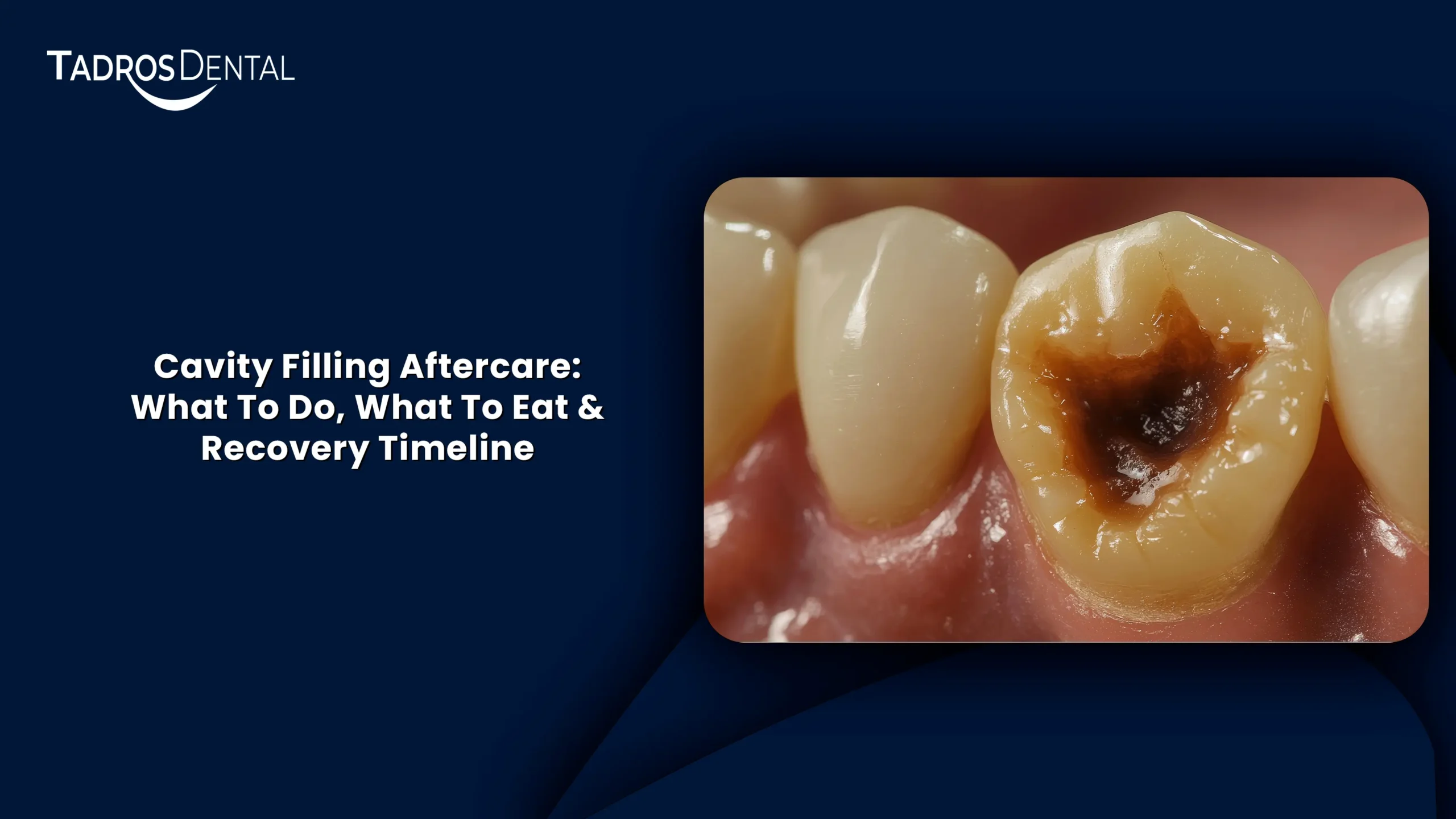
A filling restores the part of the tooth damaged by decay. Once the cavity is cleaned, the filling material is placed to seal and support the tooth. After treatment, the tooth may need a little time to adjust to the new shape and bite.
It is common to notice:
These symptoms are usually temporary.
Most people feel better within a few days. Some mild sensitivity can last up to two weeks, especially if the cavity was deep. The main thing to watch is improvement. The tooth should gradually feel better, not worse.
Also Read: Is a Tooth Filling Painful? Myths vs. Facts About the Experience
The first 24 hours after a tooth filling are important for protecting the treated tooth and reducing discomfort. Simple care, gentle chewing, and avoiding certain foods can help the area settle properly.
Do not chew until the numbness is gone. When your mouth is still numb, you may accidentally bite your cheek, lip, or tongue. Once feeling returns, chew gently and avoid putting too much pressure on the treated side right away.
During the first day, avoid foods that are hard, sticky, or very crunchy. These can irritate the tooth or make the area feel more sensitive.
Yes, in most cases, you can brush and floss the same day. Just be gentle around the treated tooth. This is an important part of aftercare for fillings because keeping the tooth clean helps prevent plaque buildup around the filling.
Try to stay away from:
These foods can put stress on a new filling or make a sensitive tooth hurt more.
Soft foods are the safest choice right after treatment. Good options include:
These foods are easy to chew and less likely to bother the tooth.
Water is the best choice after a filling. You can also drink milk or other mild drinks at room temperature. Avoid anything very hot or very cold if the tooth feels sensitive.
Foods that are sticky, very hard, or require strong biting can make recovery less comfortable. Even if they do not damage the filling, they can increase pain and pressure. A soft diet for the first day is one of the simplest parts of teeth filling after care.
A filled tooth may react to hot, cold, or sweet foods because the tooth nerve has been irritated during treatment. This is more common when the cavity is deep. Mild sensitivity does not always mean something is wrong. It often means the tooth is adjusting.
Slight tenderness when chewing can happen at first. But if you feel a sharp pain every time you bite down, the filling may be a little high. That means it is hitting before the rest of your teeth come together. A small adjustment can often fix this quickly.
Sometimes the tooth is not the main problem. Your jaw muscles may simply feel tired after keeping your mouth open for a long time during treatment. That kind of soreness usually gets better with rest, soft foods, and time.
For many patients, sensitivity gets better within a few days. In some cases, it may last up to a couple of weeks while the tooth settles. The key sign to watch is progress. It should improve gradually, not become stronger or more constant.
If a new filling feels uneven, painful, or uncomfortable when you bite, it may need a simple adjustment. Here are some common signs that your filling may need to be checked.
If the filled tooth feels taller than the others or touches first when you close your mouth, the bite may be uneven. This can make chewing uncomfortable and put extra pressure on the tooth.
Sharp pain when your teeth come together is not something to ignore. It may mean the filling is too high or the tooth is under stress. This usually does not mean the treatment failed, but it does mean the tooth should be checked.
A bite that feels off can sometimes lead to pressure in the tooth, jaw fatigue, or even a dull headache. If that feeling started after the filling and does not ease, the bite may need a simple correction.
If food keeps catching in the same area, mention it at your follow-up visit. Food trapping can be a sign that the contact or shape around the filling needs attention.
A filled tooth should improve with time. If the following signs persist or worsen instead of improving, contact your dentist for further evaluation.
Mild soreness is expected. Severe, throbbing, or pulsing pain is not. If the tooth hurts intensely or keeps you awake, call the dentist.
Swelling, pus, fever, or a bad taste in the mouth are not normal signs of aftercare for a filling. These symptoms need attention right away.
If the filling chips, cracks, or falls out, the tooth is no longer well protected. Do not wait too long to have it repaired.
If pain or sensitivity continues for more than two weeks without improvement, schedule a visit. Recovery should move in the right direction, not stay stuck.
Long term aftercare for a filling is simple but important:
These habits help protect both the filling and the natural tooth.
Also Read: 6 Cavity Care Essentials: A Complete Guide for 2026
No filling lasts forever. Its lifespan depends on the material, the size of the filling, where it sits in the mouth, your chewing habits, and how well you care for your teeth. Fillings can last 10 to 20 years, while newer patient guidance commonly notes that many composite fillings last about 5 to 10 years.
Silver amalgam fillings generally last longer than white composite fillings, according to ADA resources, though composite materials have improved and are widely used because they blend in better with natural teeth.
A filling may need replacement if it becomes loose, cracked, rough, or painful, or if the tooth develops new sensitivity or visible damage around the edges. These signs should be checked before the problem gets deeper.
If your tooth still feels sore, sensitive, or uneven after a filling, do not wait too long to get it checked. Book an appointment with Tadros Dental today to ensure your recovery stays on track.
Call (281) 664-2244 to connect with our expert!
Usually, it is best to wait until the numbness wears off. With composite fillings, many people can eat once normal feeling returns.
Numbness often fades in about two hours, but timing can vary.
Because the tooth nerve and surrounding tissues were irritated during treatment. Mild sensitivity to hot, cold, or pressure is common at first
Yes, a filling can loosen, crack, or fall out and should be repaired promptly.
Yes. Brush and floss gently the same day unless your dentist tells you otherwise.