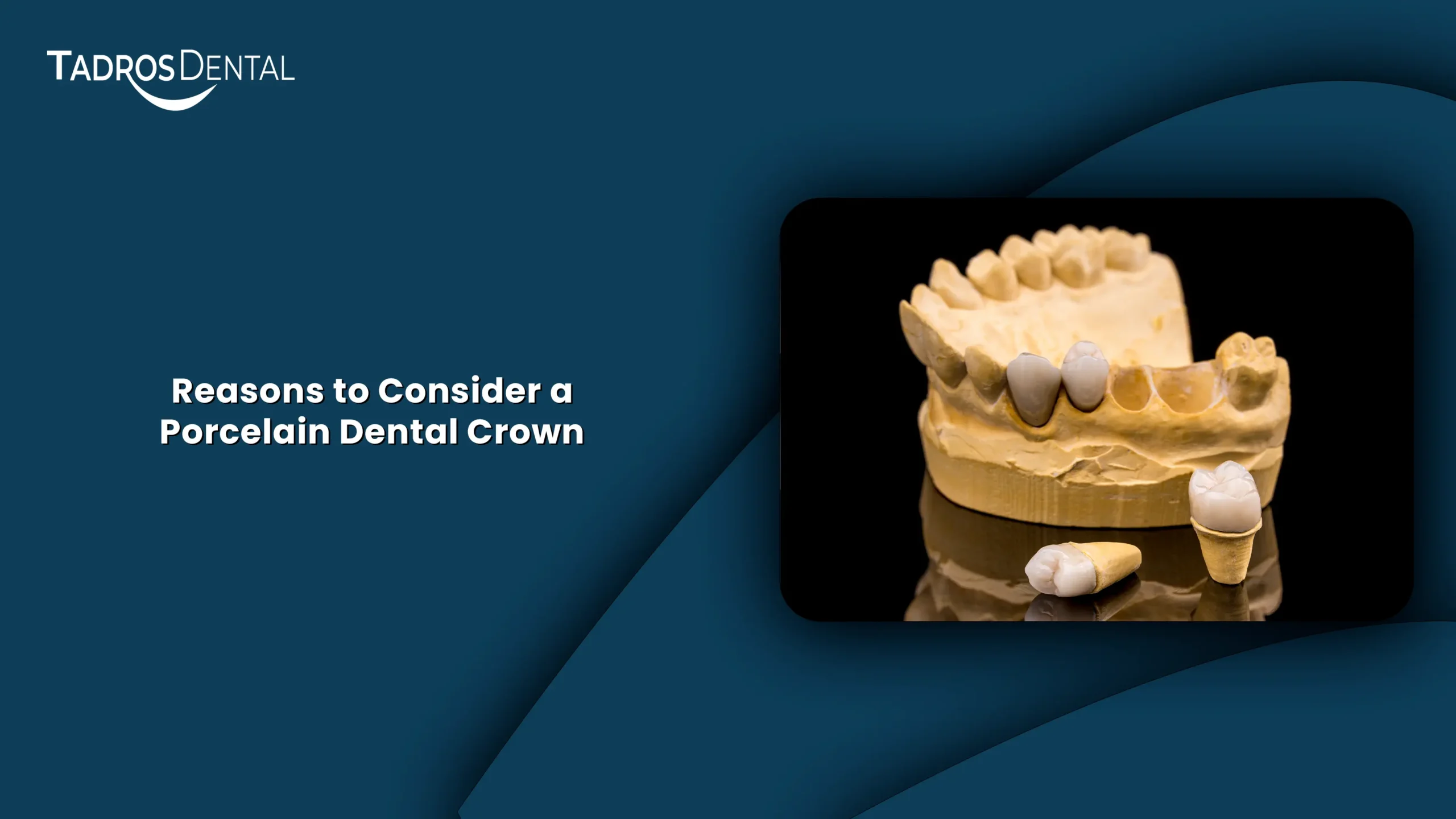
A tooth can look fine on the outside and still be weak underneath. That is what makes crown decisions confusing for many patients. They do not feel pain every day, so they assume nothing is urgent. Meanwhile, dental teams often see the same problems: patients delay treatment, the tooth fractures later, and everyone ends up wishing the crown had been done sooner. This blog discusses situations where a porcelain crown is appropriate, why patients tend to care about the benefits, and how to establish real expectations in order to make the outcome natural and lasting.
A crown is a protective cap that encloses a tooth, to protect it, gives it its shape, and allows you to chew once again. Ceramic or porcelain crowns have been created to replicate your natural enamel and are more frequently used due to their ability to blend seamlessly with neighboring teeth.
If you are deciding between crown materials, porcelain-based crowns are often considered because they balance appearance with everyday function.
When Does a Dentist Usually Recommend a Porcelain Crown?
A crown is not “just cosmetic.” It is often a protective step.
Most crown cases follow a simple two-step flow.
The dentist reshapes the tooth in order to have the crown fitted properly. Then there is the taking of impressions or scans, which then form a crown corresponding to the bite and the surrounding teeth.
A temporary crown helps in preserving the tooth while the lab manufactures the final crown. During the next visit, the dentist examines the fit and bite and finally cements or bonds the final crown.
Crown work may cause slight tenderness, and this is most often noticed during temperature or pressure. The sensitivity tends to subside with the adjustment of the tooth.
Porcelain can be shade-matched and shaped to blend with neighboring teeth. If the crown is on a front tooth, this is often the number one reason people choose a porcelain crown dental restoration.
Dark fillings, internal staining, or a tooth that looks “grey” can sometimes show through thinner materials. Porcelain is often chosen because it can mask what is underneath while still looking like enamel.
The job of a crown is protection. A good porcelain dental crown has the ability to reclaim the capacity to chew food and provide protection to the remaining tooth structure. It is difficult, depending on the type of ceramics and the position it has in the mouth (back or front), and the reason why the dentist asks about grinding and the bite habits.
Some older crown styles that use metal frameworks can show a darker edge near the gum over time. One reason many patients prefer all-ceramic porcelain options is to avoid that “shadow” look. (This is a common tradeoff discussed when comparing porcelain-fused-to-metal crowns with all-ceramic crowns.)
A crown differs from a veneer. Veneers involve covering mostly the front side, whereas crowns cover the tooth in a more holistic manner. A porcelain crown is commonly used when both aesthetics and protection are required for a certain tooth.
Being clear about tradeoffs leads to happier patients and fewer surprises.
Ceramic crowns may get chipped when subjected to a lot of pressure, usually when the bite is not in place or when the wearer grinds at night. A great number of dentists recommend a night guard to grinders, regardless of the type of material of the crowns.
Back teeth take more chewing force. Some ceramic types handle this very well, but material choice matters. Your dentist may recommend a specific ceramic (like zirconia-based ceramic) for durability.
The crown’s long-term success depends on accurate tooth preparation, good impressions or scans, lab quality, and proper bonding or cementation. This is not something a patient can “see,” but it affects comfort and longevity.
A crown does not mean the tooth can be ignored. If the oral health is bad, decay may still occur towards the periphery of a crown.
If pain, bite pressure, or sensitivity keeps getting worse instead of better, the bite may need a small adjustment. It is usually a quick fix in the clinic.
People often search for porcelain dental crown cost because they want a clear price. Realistically, cost varies widely based on clinical and practical factors, so it is better to understand what drives it.
Here are common factors that can change porcelain dental crown cost:
A porcelain dental crown is often chosen because it can look very natural while still protecting a tooth that needs real support. The best results come from matching the crown material to the tooth’s job (front tooth beauty vs. back tooth force) and protecting it with good daily care. If you have any doubts or queries, connect with our expert today at Tadros Dental.