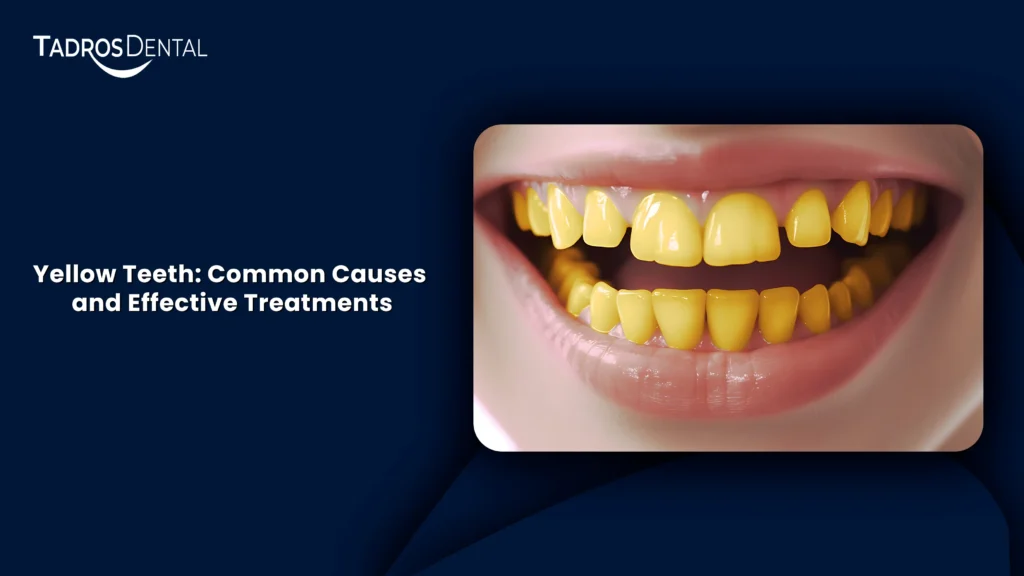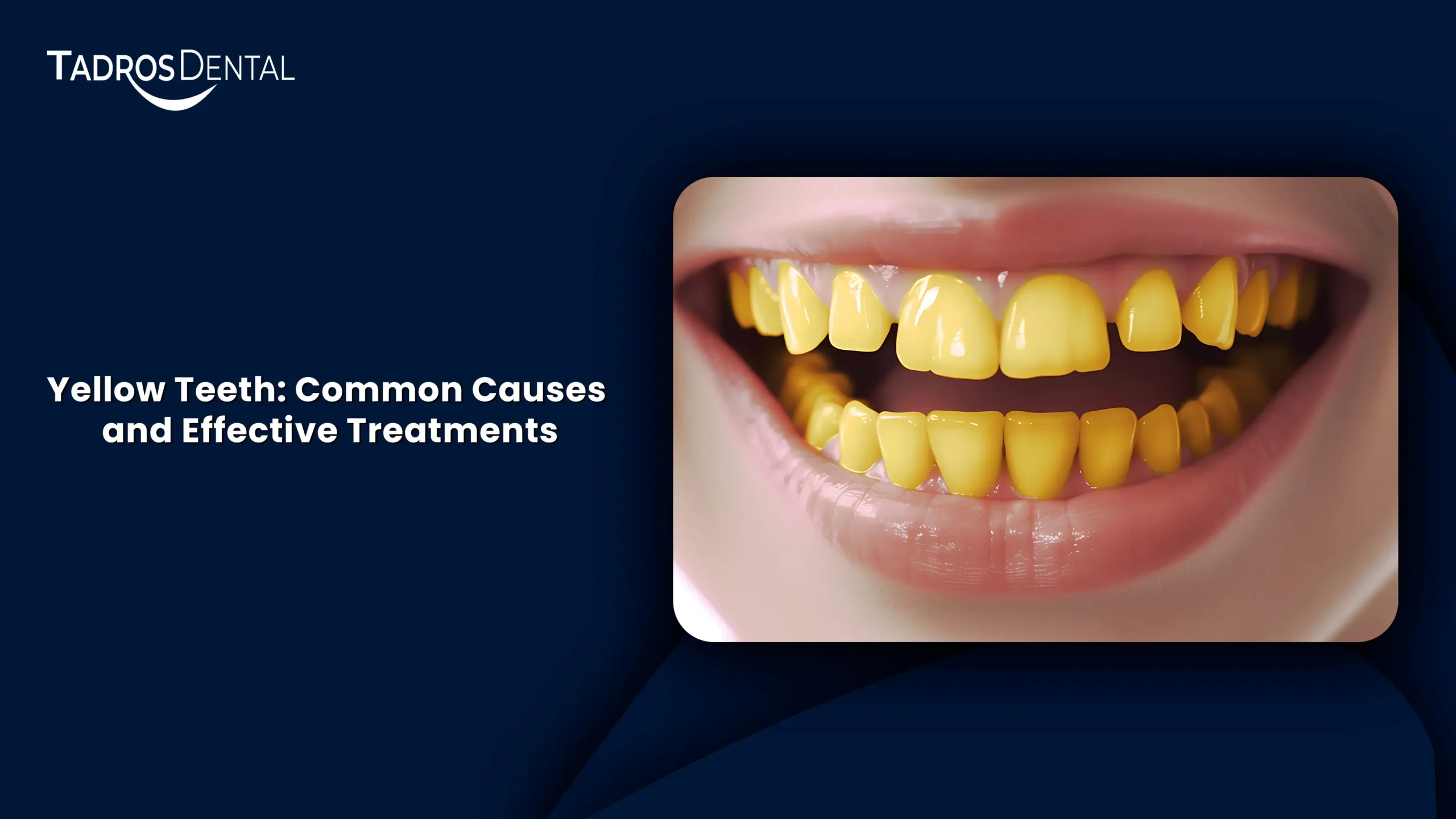
Millions of individuals look at themselves in the mirror and ask the question, “Why my teeth are yellow?” Yellow teeth are a condition that affects millions of people in the world and, in most cases, leads to loss of confidence in smiling and fear. Indeed, research indicates that approximately 40% of adult patients have some level of tooth discoloration, and many of them are not satisfied with their smile.
It is either a lifestyle choice that results in the yellow color of teeth, or you just have yellow teeth. In any case, understanding the underlying problems is the first step to long-term change. The yellow color of the teeth may be the result of everyday habits or some underlying dental issues, but the good news is that there are effective ways to solve the issue.
This blog shows the most common causes of yellow teeth and provides effective treatment methods to turn the smile bright. Let’s start.
Yellow teeth are developed when the layers become discolored on the surface or the layers underneath them. Dentists classify discoloration as extrinsic (surface stains) or intrinsic (deeper issues). Let us have a look at the main reasons.
Lack of oral hygiene enables the plaque to solidify to form tartar, which forms a yellowish film on the teeth. Even good brushers have problems with drugs (such as some antibiotics or antihistamines). Too much fluoride in childhood, which leads to fluorosis, or trauma that damages internal tooth structure, causes yellow teeth.
On exceptional occasions, diseases or therapy such as chemotherapy change the color of the teeth.
Some foods and drinks are at the top of the list. Dark pigmented products include chromogens that attach to enamel with tannins, causing stains. Acidic drinks destroy the enamel and reveal the yellowish dentin.
The foods that commonly stain the teeth include berries, tomato-based sauces, curry, and soy sauce. Non-alcoholic drinks such as coffee, black tea, red wine, and cola are also responsible for tooth discoloration. Coffee and tea alone are important since they are consumed on a daily basis.
One of the quickest methods through which one can develop yellow or brownish teeth is tobacco use. Nicotine and tar leave their stubborn spots on the surface that cannot be completely removed by brushing. Gradually, they accumulate, making a smile that was once white and bright grey.
Quitting smoking not only enhances general health but also stops further discoloration.
Enamel also wears out in old age as a result of chewing and exposure over the years. This shows more of the dentin, which is naturally yellow. According to a study, aging makes the yellowish dentin underneath more visible.
This is also influenced by genetics; others are either born with thin enamel or have naturally yellow teeth. Let’s use this table to understand the intrinsic and extrinsic types of discoloration.
| Cause Category | Examples | Type of Discoloration |
| Foods/Drinks | Coffee, tea, red wine, berries, curry | Extrinsic (surface) |
| Habits | Smoking, tobacco | Extrinsic, stubborn |
| Aging/Genetics | Thinning enamel, natural dentin | Intrinsic |
| Medications/Trauma | Antibiotics, injury | Intrinsic |
| Hygiene | Plaque buildup | Extrinsic |
Treatments range from mild at-home-based ones to intense professional ones. Depending on the type of discoloration, there is a variation in the results; the surface stains react more quickly than the intrinsic ones.
Intelligent habits are the beginning of prevention.
At-Home Remedies
Also Read: Is Teeth Whitening Safe? Professional vs. At-Home Teeth Whitening Options
Professional Treatment
Statistically, professional whitening has more users who are highly satisfied with substantial changes, significantly more than most of the OTC products.
| Treatment Type | Pros | Cons | Best For |
| OTC Products | Affordable, convenient | Slower results, possible sensitivity | Mild surface stains |
| Professional In-Office | Fast, dramatic (up to 8 shades) | Higher cost, temporary sensitivity | Quick transformations |
| Custom Take-Home Trays | Effective, controlled | Takes longer | Moderate discoloration |
| Veneers/Bonding | Permanent coverage | Invasive, expensive | Intrinsic or severe cases |
You can recover your bright smile and self-esteem by dealing with causes before they get worse and by deciding on the correct treatment. You must switch to professional care; it is better to start today and have a consultation on a personal basis.
Ready to brighten your smile? Book an appointment at Tadros Dental Clinic and find safe and effective whitening products that are suitable for you.
Q1. Why are my teeth yellow even after brushing?
Brushing only cleanses the plaque but might not address the deep-seated food, aging, and genetic stains. The internal condition, such as dentin color, is evident through thin enamel.
Q2. Is it possible that naturally yellow teeth turn white?
Yes, though results vary. Genetic yellowing is best addressed by professional bleaching, which lightens a few shades.
Q3. Is teeth whitening a long-lasting process?
Home-based solutions last for months, and professional interventions last 1-3 years with healthy habits.
Q4. Can everyone have their teeth whitened?
The majority of the population can handle it, whereas sensitive gums or teeth might require modified treatments. Consult a dentist first.