In the United States, the typical dental crown cost sits in the broad range of eight hundred to three thousand dollars per tooth. That gap feels huge when you are trying to plan a budget.
Cost is also the top reason people delay care and proper treatment. According to a recent report by KFF, approximately one out of three adults missed or delayed the care they needed due to cost. You are not the only one to seek treatment only when it is too late. If you have been putting off treatment, you are not alone. This blog explains the real drivers behind the cost of a dental crown, what you can do to manage it, and how to pick the right option without guesswork.
When the tooth is too weak to support another filling, then crowns are recommended. Think cracked molars, extremely big restorations that do not work, a tooth on an implant root canal, or the last veneer. The entire visible tooth is covered by a crown, which restores the shape and strength of the tooth and allows the person to chew at will. Many of the crowns can last between ten and fifteen years, with proper home care and checkups, and others can last even longer.
Price depends on the material, the tooth, and the work your dentist must do to prepare and finish the case. A porcelain crown near a typical average of about fourteen hundred dollars, with ranges that can run from roughly seven hundred to well over two thousand for certain materials and situations.
A quick way to picture it:
When you are completing a dental implant, bear in mind that a crown is just a portion of it. The implant post and the abutment are different components; thus, the total project is elevated than a crown on a natural tooth.
Location and experience of the dentist matter the most here; big metro areas often cost more than small towns because of rent, staff, and lab costs. Clinic approach matters too. A practice that uses a premium laboratory or same-day CAD-CAM systems might charge more for the convenience and technology. A two-visit lab crown, on the other hand, might be cheaper but will involve a temporary crown and a second visit. The correct decision will be made based upon your schedule, your tooth bite size, and the visibility of your tooth when you smile.
Two people can get a crown on the same tooth and pay different totals. Here is why that happens.
None of these is “extras” in the bad sense. They are normal parts of care that make the crown last.
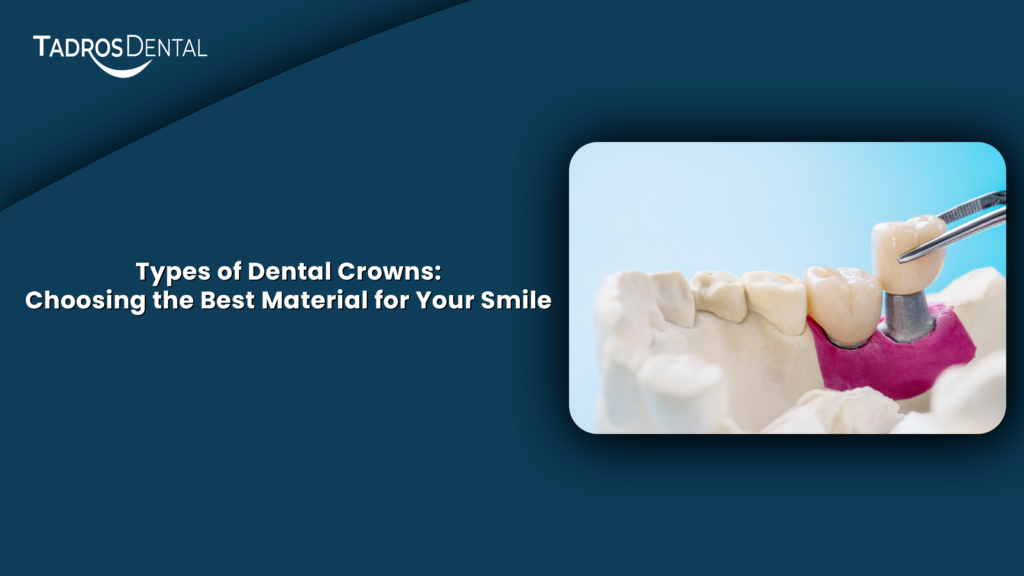
Materials vary in strength, look, and lab time.
Enquire regarding a night guard if you have a teeth-grinding habit. Insuring against the new crown will cover it for years. Survival studies report high success rates at five and ten years when crowns are planned and maintained well.
Many dental plans follow a simple pattern. Preventive care is covered at one hundred percent. Basic work is covered at eighty percent. Quite big work, like crowns, is commonly paid half price, up to an annual limit, commonly a dollar or two thousand. After you have hit that limit, you must pay the rest yourself. This is the reason why timing is important in case you require more than 1 crown in a year. Ask your office to prepare a pre-estimate to get the numbers in advance.
A visit includes an exam, X-rays, and a discussion of materials. If the tooth needs a core build-up, that is added. For a lab crown, you leave with a well-fitted temporary. Visit two is the placement day. Your total might land near twelve hundred to two thousand dollars without insurance, depending on the material and prep work. With insurance that pays half up to a one-to-two-thousand-dollar cap, your share can drop sharply, especially if you have not used much of your annual maximum yet.
Most patients see totals between eight hundred and twenty-five hundred dollars for a single crown without insurance, with porcelain averaging around the mid-teens based on national fee guides. Your number depends on the tooth, material, and prep work.
Usually yes. Teeth that have had a root canal often need a core build-up and sometimes a post. Those are added items on the estimate.
Ten to fifteen years is a common window, and good home care plus a night guard can extend that. Survival rates in clinical studies are strong when cases are planned well and maintained over time.
Ready for a clear, local estimate you can trust. Book a quick visit with the Tadros team and get an itemized plan for your case at Tadros Dental.
Prefer to talk before you book. Ask about materials, timelines, and ways to use your benefits so you pay less out of pocket.


Privacy Policy | Powered by Capline, a Top-Rated Solutions Provider for Dental Offices.