Tooth decay is very widespread, but most adults delay treatment due to the fear of high dental filling cost. A massive national survey revealed that in the United States, over one out of five adults has untreated tooth decay, and this has left millions of individuals with cavities that literally need attention.
Simultaneously, recent statistics indicate that over a quarter of the adult population has either postponed or avoided health care, even dental services, due to affordability.
Small cavities are normally not maintained small when they are left unattended. What might have been an easy visit and stop by with a filling may become an aching tooth, a nerve issue, or even an essential root canal and crown. That is precisely the time when the dental filling charge, which was initially stressful, becomes a significantly bigger bill.
In this blog, we’ll explain what actually influences the cost of dental filling, how to determine the average cost of dental filling, and an achievable manner in which to control the cost of dental filling care without compromising the quality as well as comfort.
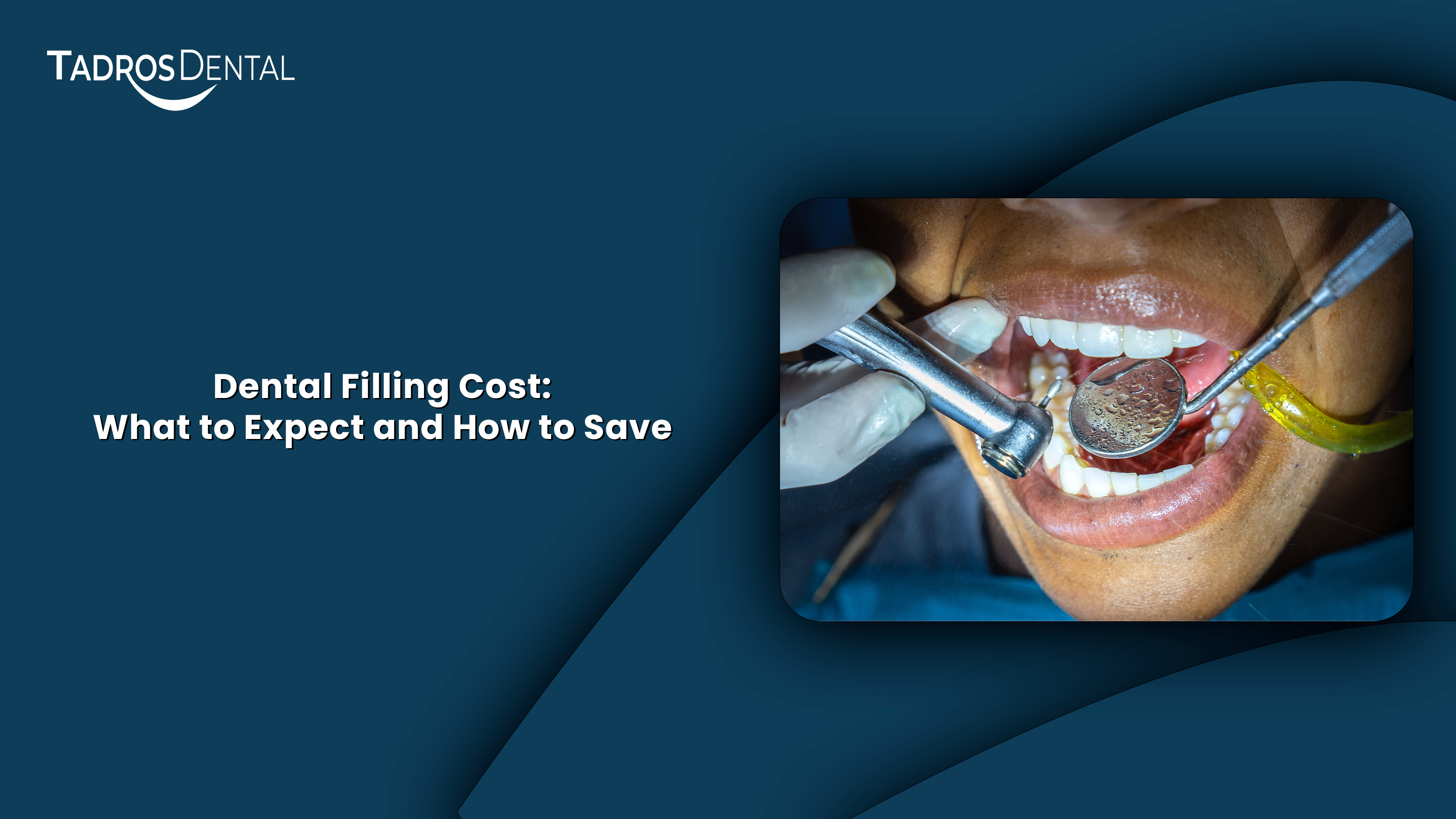
A filling is not a Band-Aid for a hole in your tooth. By the time you have a cavity, the bacteria have already reached the hard outer layer and are now beginning to dissolve the inside of the tooth. In the visit, your dentist does it by scaling off the damaged part, cleaning the area, and then putting in the material that replaces the shape and covers the tooth in such a way that bacteria cannot easily enter it again.
When this is achieved at an early age, there is a likelihood that the tooth will retain its strength, and the cost of a dental filling will remain within a lower scale. In the event of deeper decay spreading, then a greater amount of tooth structure must be removed, typically necessitating a larger restoration, more chair time, and a greater cost of filling a dental treatment of that particular tooth.
There is no single fixed fee that every office follows, but there are reliable ranges from national data and insurance estimates. In many parts of the United States:
When you look across different offices and materials, the average cost of dental filling is often somewhere between about two hundred and six hundred dollars per tooth for patients who pay without insurance.
Insurance plans can bring that down, but they can also add rules and limits that you need to understand.
So when your dentist gives you an estimate, they are not pulling a number out of thin air. They are choosing a material, planning the time, and working within the range of dental filling costs that are normal for their area and type of practice.
Even in the same city, two people can pay very different amounts for a filling. Several practical factors sit behind the average cost of dental filling.
A tiny spot near the front of the tooth is much simpler to treat than a deep cavity on a back molar. Large fillings usually take more skill and time, and sometimes need more complex materials. All of this gradually lifts the dental filling cost for that tooth.
Material choice has a major impact on the cost of dental care. Silver colored amalgam has been around for many years, is very strong, and usually sits at the lower end of the fee range. Tooth colored composite blends with the natural tooth and is extremely popular, but it is more technique-sensitive and often more expensive. Gold or ceramic inlays and onlays can cost even more because they require lab work and extra appointments.
Because of this, the average cost of dental filling with composite is usually higher than the average with amalgam, but many patients feel the natural look is worth it.
A practice in a major metro area with high rent, extended hours, and advanced technology may charge more than a small office in a rural town. The community clinics and dental schools might provide a cheaper cost of a dental filling since they are financed or trained that way. None of these is inherently more or less advantageous, but they contribute to the explanation of why the price of dental care is not consistent across the board.
If you have dental insurance, your plan may pay a fixed percentage of the dental filling cost once you meet your deductible. Some plans pay a higher percentage for silver fillings than for tooth colored fillings on back teeth. Some plans pay based on an allowed amount that is lower than the office fee. All of this changes the average cost of dental filling actually paid by you.
If you do not have insurance, the office may give a discount for same-day payment or offer an in-office savings plan that reduces the cost of dental treatment and other services.
A typical filling visit may include:
Some offices bill each piece separately, while others bundle them. Looking at your estimate, you will be able to pose the question of what is covered by the average cost of a dental filling and what items may appear individually on the final statement.
Many people delay treatment because they hope the tooth will stop hurting or because the dental filling cost feels hard to handle that month. Unluckily, decay never heals itself. When the bacteria are within the tooth, they keep on penetrating further.
With time, a small cavity that would have been remedied with a mere filling may become:
Proper daily maintenance will never eliminate any of the existing decay and can delay further damage as well as preserve the existing fillings. Daily brushing of teeth with fluoride toothpaste, drinking water after eating and drinking sweets, and regular visits to your dentist will make the cost of future dental fillings much less, since your dentist catches you early enough before things get worse.
If you have dental insurance, review the section that explains fillings. Many plans cover around eighty percent of the dental filling cost for basic restorative care, up to a yearly maximum.
If you need work on several teeth, your dentist may help you plan care across two benefit years. This can stretch your annual maximum and flatten out the average cost of dental filling that you pay during each year.
A growing number of offices offer membership plans for patients who do not have insurance. For a simple yearly fee, you receive cleanings and exams at a discount and a set percentage off the cost of filling dental procedures. Some offices also partner with third-party financing companies, which lets you break the financing cost into smaller payments with clear terms.
If your budget is very tight, a dental school or nonprofit clinic can be a safe way to reduce the average cost of dental filling. Care is often provided by students who are closely supervised by experienced dentists. Visits may take longer, but the cost of dental treatment is often significantly lower than in private offices.
Good daily care will never remove existing decay, but it can slow new damage and protect the fillings you already have. Brushing twice a day with fluoride toothpaste, cleaning between teeth, drinking water instead of sugary drinks, and seeing your dentist for regular checkups all help reduce future dental filling cost by catching problems early.
Tadros Dental is able to assist you in getting straight and kind answers regarding your personal dental fillings cost, should you be living in or around the Houston and Cypress area. The staff puts an emphasis on the mild approach, explanations, and plans of treatment that do not exceed your budget.
You can learn more or request a visit to Tadros Dental. During your appointment, the team will discuss your choices, provide details on the average price of a dental filling in your case, and assist in selecting an option that would make your smile comfortable and your future treatment budget manageable.