Tooth loss and crown work are common. In the United States, over 150 million people are missing at least one tooth, and about 2.5 million implants are placed each year. That is a lot of temporary crowns and a lot of questions from patients who are unsure what to do if one feels loose or pops off.
Dental practices also feel the pressure. Missed instructions can cause confusion and delays. With the support of credible clinical references, this blog answers the questions of the purpose of your temporary dental crown, care, and what you should expect until you are finally crowned.
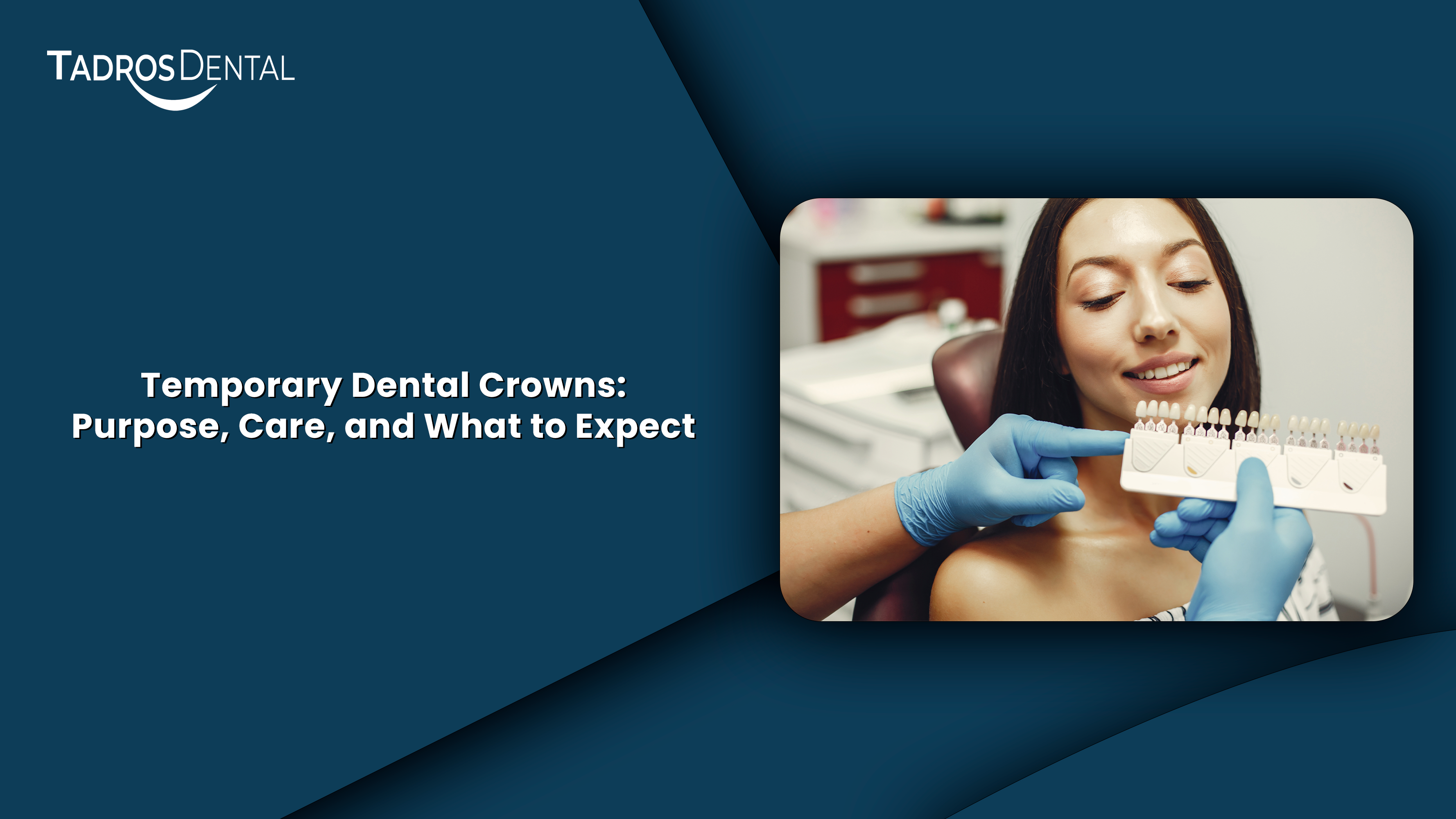
A temporary dental crown is a short-term resin or acrylic cap placed over a prepared tooth or implant to protect it and maintain function and appearance until the final crown is ready.
You will receive a temporary if your dentist reshapes a tooth for a crown, and the permanent one will be ready at a later visit. You may also wear a temporary after a root canal, after a large filling, or while a front tooth implant heals and the gum line is shaped for the best final look. Implant studies show that provisional crowns can guide soft tissue contours in the smile zone when used in the right cases.
That small cap preserves comfort and alignment while the lab work finishes. It lowers the chance of sensitivity, protects the prepared surfaces from plaque and temperature extremes, and holds the space so the final crown fits as designed. The American Dental Association’s patient education explains that crowns support weak or broken teeth and cover implants, and a temporary crown keeps you on track between the two visits.
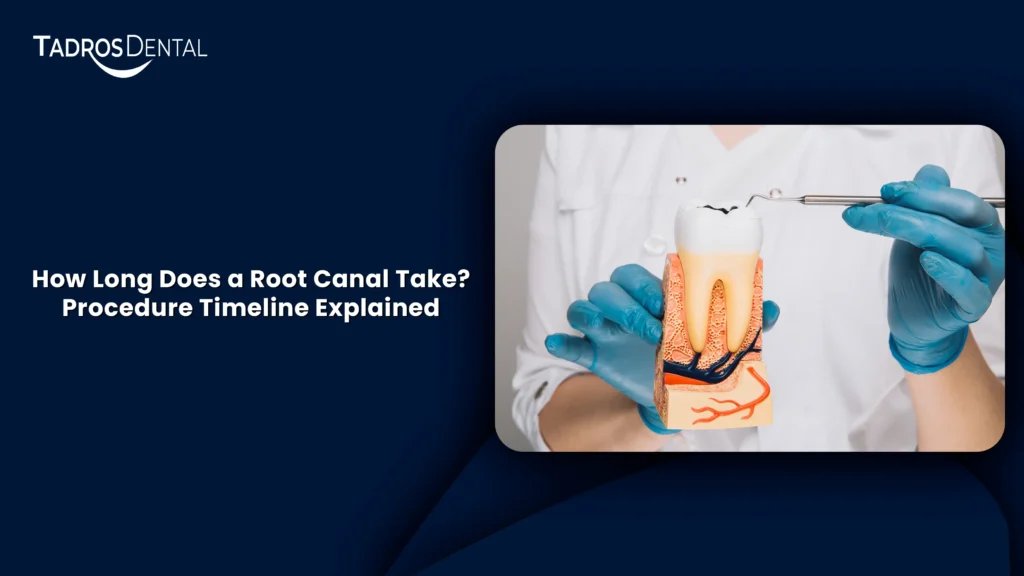
Most patients receive the temporary at the end of the first crown visit. You will usually wear it for about two to three weeks, then return to have the temporary removed and the final crown cemented. This will depend on the case you are doing and the lab schedule. Should anything be out of place in the bite, or in case the cap is not on at your next visit, call the office and have it adjusted.
Consider the crown procedure as a sequence. The first step is diagnosis and planning. The second step is reshaping the tooth or implanting an abutment. Then the temporary dental crown shields the location until the laboratory completes your custom crown. The last phase is the final crown, where the dental team attempts to place the final crown, verifies contacts and bite, confirms shade, and adhesively bonds the final crown. This flow is described in clinical guides since it maintains the tissue in a healthy condition and ensures that the final fit is predictable.
It is possible to resume normal life with some dental and diet changes.
These options ensure there are no tugging forces on the cement and hold the cap there until your next visit.
If your temporary moves or pops off, do not panic. Save the cap and call your dentist to have it recemented. If you cannot be seen quickly, an over-the-counter product labelled as a temporary adhesive for a dental crown can hold the cap for a short time. Clean and dry both the inside of the cap and the tooth. Place a tiny amount of the temporary cement, seat the crown in the same position, bite down to hold it, and wipe away any extra material. This is a bridge to your appointment, not a long-term fix.
Pick a product intended for dental crowns or lost fillings. Avoid household glues since they can damage tissue. Some temporary cements include eugenol, which classic studies found could reduce the bond strength of certain resin cements if permanent bonding is done too soon. The evidence is mixed and also depends on timing and materials, which is why the safest path is a quick call to your dentist to log what you used and schedule a proper recement.
On a natural tooth, a temporary crown mostly protects and maintains space. On an implant, a dental implant temporary crown often has an extra job. It can be shaped to guide the gum line, so the final restoration looks natural. Depending on your particular site, your dentist will determine which one is better to use in a healing cap or a provisional crown.
Light gum tenderness and slight temperature sensitivity may last a day or two. Something bites high, something hurts you, your face gets puffy, your mouth tastes bad, your hat won’t keep on; all of this is worth a call. These symptoms are normally easy to fix, and the sooner they are addressed, the better they are in the future. The advice is reflected in practical office handouts and journal articles to ensure that you are confident in what is normal and what is not.
Individuals who extract a front tooth usually choose a provisional on the implant devices since they allow the staff to carve soft tissue as you proceed with life with a full smile on a daily basis. Immediate placement and provisionalization studies demonstrate positive results under the conditions of a healthy site, steady implant during surgery, and a provisional, which prevents heavy biting contact during the healing period. These criteria will be discussed with you by your dentist.
A temporary dental crown insulates the tooth or implant and allows you to maintain your bite as your final crown is being made at the lab. The majority of problems are avoided by smart daily treatment and soft flossing. In case it loosens, it can be temporarily fixed using some temporary bonding glue, which can only fix it temporarily, after which it will only be firmly fixed by your dentist. Temporary crowns of a dental implant can be used to direct the gum line to ensure that the final smile is natural.
Need attentive crown care in one place.
Tadros Dental offers careful temporaries, clear home care coaching, and quick help if a cap loosens. Schedule your visit at Tadros Dental and leave with a plan that fits your smile.