A cavity does not always start with tooth pain. Sometimes, it begins as a tiny dark spot, a rough edge your tongue keeps noticing, or a quick sting when you drink something cold or sweet. Many people ignore these early signs because the tooth still feels intact, and they can eat and drink without much discomfort. But the real problem starts when decay moves deeper into the tooth. At that point, a simple filling may no longer be enough.
Tooth decay is still common in the United States. CDC data show that 25.9% of adults ages 20 to 44 had untreated dental caries during 2015 to 2018. The rate was 25.3% for adults ages 45 to 64. That is one reason a tooth cavity filling is such a common dental treatment. It helps prevent decay from reaching the deeper parts of the tooth.
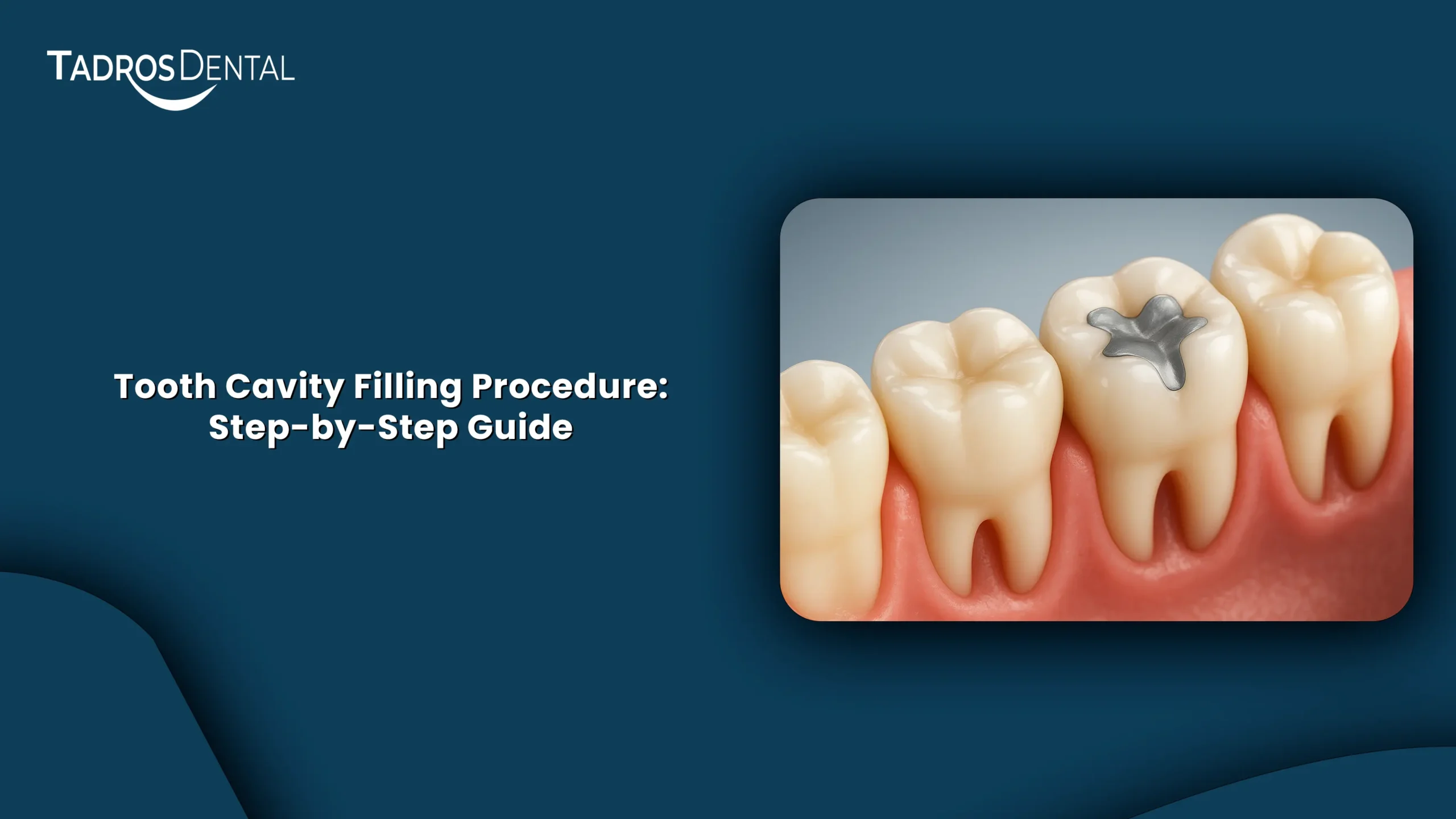
A tooth cavity filling is a dental treatment used to repair a tooth damaged by decay. During the procedure, the dentist removes the decayed part of the tooth, cleans the area, and fills the space with a dental material.
The goal is simple. A filling helps restore the tooth’s shape, protects it from more decay, and allows you to chew more comfortably. Fillings, also called restorations, are one of the main treatment options for cavities. They may be made from materials such as composite resin, porcelain, or dental amalgam.
A filling is usually used when the cavity is small or medium in size. If the decay is too deep, the tooth may need another treatment, such as a crown, root canal, or extraction.
Also Read: How to Prevent Tooth Decay: Essential Tooth Care Tips
Symptoms that may indicate you need a filling
Not all cavities cause noticeable pain. However, recognizing the early signs of tooth cavity can help you seek treatment before the damage becomes more serious. You might need a filling if you have any of the following symptoms:
In some cases, there are no clear symptoms. If so, the cavity may be found during a dental exam or dental X-ray.
The dentist will carefully inspect the tooth before performing the cavity filling. This may involve examining the tooth, checking the surrounding gum area, and taking an X-ray.
The X-ray helps determine the depth of the cavity and how close the damage is to the nerve. This is important because not all cavities are the same. A small surface cavity needs different care than a deeper cavity between the teeth or close to the root.
Once the dentist determines that a filling is the best treatment, the filling process can begin.
When people know what actually happens, they often feel better. A filling usually takes one appointment and is not a complicated procedure.
The dentist will usually apply a local anesthetic to numb the tooth and the surrounding gum area. This helps keep you comfortable during the procedure.
There may be a slight sting when the medicine is injected, but once it takes effect, the area should feel dull or heavy. You may feel movement or vibration during the treatment, but you should not feel sharp pain.
Once the tooth is numb, the dentist removes the part of the tooth affected by decay. This is done using dental instruments designed to clean the weakened area.
This is an important step because decay cannot be left behind. The filling needs a healthy, clean area to bond properly.
You may hear some noise from the dental instruments and feel some pressure, but the numbing medicine helps make the process easier.
After the decay has been removed, the dentist cleans the area. This helps clear away small particles and prepares the tooth for the filling material.
This also helps create a better seal, which reduces the risk of bacteria remaining under the filling.
The empty space in the tooth is then filled. If the dentist is using a tooth-colored material such as composite resin, it may be placed in layers. Each layer is hardened with a curing light before the next layer is added. This helps strengthen the filling and allows it to fit properly.
If a different material is used, the process may be slightly different, but the goal is the same: to restore the tooth and seal the damaged area.
After the filling material is placed, the dentist shapes it so it feels like a natural part of the tooth. A thin strip of paper may be placed in your mouth, and you may be asked to bite down. This helps the dentist check whether the filling is too high.
This step is more important than many people realize. A filling that is too high can make the tooth sensitive when chewing. Fortunately, this is easy to fix with a small adjustment.
The final step involves smoothing and polishing the filling. This helps it feel more comfortable and natural in your mouth.
The dentist will recheck everything at the end of your visit and provide basic after-care instructions.
A filling will repair the damaged portion of the tooth, but proper daily care must be maintained to ensure the remaining part of the tooth remains in good condition.
To look after a filled tooth:
A filling may last for years, but not in all cases. Fillings can wear, crack, or loosen over time, particularly if grinding your teeth or experience high bite pressure.
Sometimes a filling isn't the solution. If it is too deep, the tooth is too weak, or the nerve is involved, the dentist may suggest another treatment.
This may involve a crown, a root canal, or, in extreme cases, the extraction of the tooth.
If there are any of the following symptoms, the problem is likely to be more serious: swelling, pain that is constant, pain that wakes you up, or a pimple-like bump on the gum.
A cavity filling is not something to fear. It is a routine way to stop decay, protect your tooth, and avoid bigger dental problems later. The earlier the cavity is treated, the simpler the visit usually is. Need help with a cavity, tooth sensitivity, or an old filling that feels loose? Visit Tadros Dental to schedule a visit and get the right treatment plan for your tooth.
Fillings usually last 30 to 60 minutes. Fillings that are small may take less time. Some larger ones may take longer.
Yes, but it's better to wait till the numbness has passed. In most cases, it is easy to start with soft food.
This will depend on the materials used, the size of the filling, your bite, and oral hygiene. Some types of fillings can last for many years.
Yes. It is a very familiar and accepted dental therapy that is applied daily to treat cavities.
The hole may deepen and cause greater pain, further damage, and greater costs of treatment later.