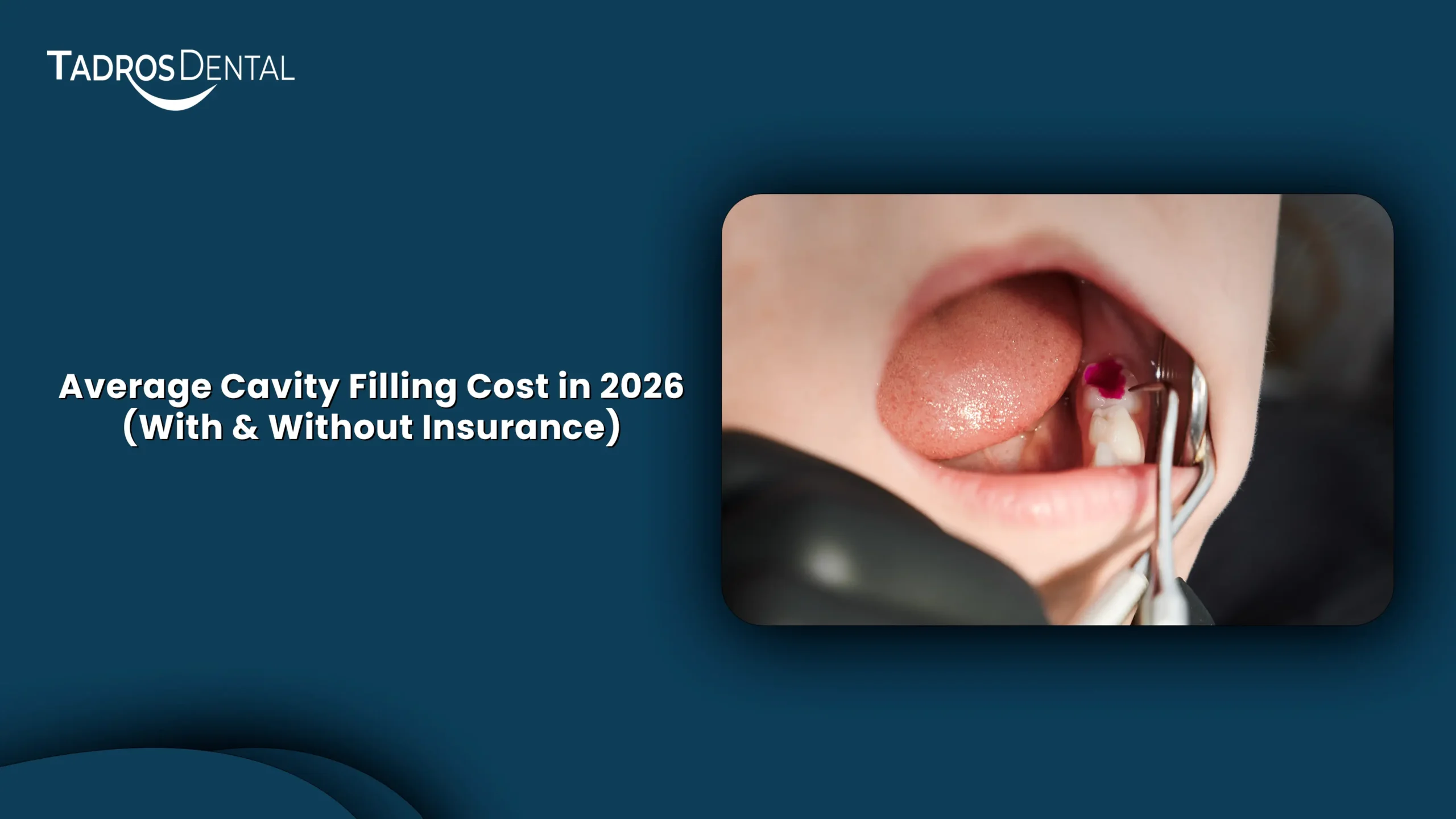
A dental filling is one of the most common ways to treat a cavity before it turns into a bigger tooth problem. The hard part for many patients is not the filling itself. It is the cost. People often want to know one thing first: how much does a cavity filling cost with and without insurance?
In 2026, the average cost of cavity filling usually ranges from about $150 to $400 per tooth for many common cases. A simple filling may cost less, while a larger filling, a tooth-colored filling, or a filling on a back tooth may cost more. Some national estimates show basic filling costs starting around $160, with the final cost changing based on the tooth, material, and number of surfaces repaired.
This matters because cavities are very common. The CDC reports that 1 in 5 adults ages 20 to 64 has at least one untreated cavity. That means many people are living with decay that may become more expensive if treatment is delayed.
The cavity filling cost in 2026 often falls between $150 and $400 per tooth for many common cases. A small silver filling may cost less, while a tooth-colored composite filling may cost more. If the cavity is large, deep, or located in a hard-to-reach back tooth, the price can rise.
A filling is not priced only by the tooth. Dentists also look at how much tooth structure is damaged, how many surfaces need repair, and which material is best for that tooth. A small one-surface filling is usually simpler. A larger filling that reaches two or three surfaces takes more time and material.
A simple way to understand the tooth cavity filling cost is this:
|
Filling Type |
Average 2026 Cost Without Insurance |
|
Silver amalgam filling |
$50 to $300 |
|
Composite tooth-colored filling |
$90 to $450 |
| Ceramic or porcelain filling |
$250 to $1,500 or more |
| Gold filling |
$250 to $4,500 |
Please note that these are general U.S. estimates, not a fixed quote. Your final price may be lower or higher based on your dentist, city, insurance, and treatment needs.
Also Read: Cavity Filling Procedure Explained What Happens at the Dentist
The cavity filling cost without insurance is usually paid fully by the patient. For many people, this means one filling may cost around $150 to $400, but the price can go higher if the cavity is larger or the tooth needs extra work.
Without insurance, you may also need to pay for other visit costs, such as:
This is why two patients can get very different prices. One person may need a small front-tooth filling. Another may need a larger molar filling that takes more time and material.
Before treatment starts, ask for a written estimate. Ask whether the estimate includes the exam, X-rays, and filling, or only the filling. This simple step can help you avoid surprise costs.
The tooth filling cost with insurance depends on your plan. Many dental plans cover fillings as a basic service, but the amount they pay can vary.
Some plans may cover 50% to 80% after your deductible is met. For example, if your filling costs $250 and your plan covers 80%, your share may be around $50 after the deductible. If the deductible has not been met, you may pay more.
Insurance can also affect the type of filling. Some plans cover silver fillings on back teeth but may pay less for tooth-colored composite fillings on molars. In that case, you may have to pay the difference if you choose composite.
Before treatment, ask these questions:
The price is not based on the word “filling” alone. Dentists price fillings by the amount of tooth repair needed.
A tiny cavity on one surface is usually simple. A larger cavity that spreads across two or three surfaces takes more time and material. A molar can also cost more than a front tooth because it handles more chewing force. Here are the main things that affect the cost of tooth cavity filling.
Silver amalgam is often the lower-cost choice. It is strong and commonly used on back teeth. Composite costs more in many cases because it matches the tooth color and takes more time to place. It is often used on front teeth or visible areas of the smile. Ceramic, porcelain, and gold fillings cost more and are not always needed for a basic cavity.
A small cavity costs less because less tooth structure needs repair. A deep or wide cavity may need a larger filling, which raises the cost.
Back teeth are harder to reach and take more chewing pressure. A molar filling may take more time than a small front-tooth filling.
Replacing an old filling can cost more than a new filling. The dentist may need to remove the old material, check for decay under it, and rebuild the tooth.
If decay is close to the nerve, a filling may not be enough. The tooth may need a root canal, crown, or another treatment. That is where the bill can become much higher.
Also Read: Types of Tooth Fillings: Pros, Cons, and Material Choices
A cavity does not heal on its own once it breaks through the enamel. It usually grows deeper with time. When decay stays small, a filling may be enough. When decay reaches the nerve, the cost can jump because the tooth may need a root canal and crown. In such cases, consulting a provider offering root canals near houston tx can help treat the infection and save the natural tooth.
A small filling may cost a few hundred dollars. A root canal and crown can cost much more. Even if a tooth does not hurt, it may still have decay. Pain often starts later, when the problem has already moved deeper. In severe cases where the tooth cannot be restored and extraction is required, patients may need to explore replacement options like dental implants. Reviewing the houston tx cost of dental implants can help patients understand the potential expenses involved before choosing a long-term solution.
If you are comparing prices, do not look at the filling fee alone. A lower price may not include the exam, X-rays, or other visit costs. Ask the dental office for a clear estimate that explains:
This helps you compare the full cost, not just the starting price.
You may not be able to control every part of the tooth filling cost, but you can reduce surprise bills.
Start with a clear estimate. Ask the office to break down the filling fee, exam fee, X-ray fee, and estimated insurance payment. If you have insurance, ask for a pre-treatment estimate when possible.
You can also lower costs by treating small cavities early. Waiting often means a larger filling, more surfaces, or more complex care. Seeking professional cavity care services houston tx at the first signs of decay can help identify problems sooner and may prevent the need for more expensive restorative procedures later. If you do not have insurance, ask whether the office offers payment options, in-house plans, or phased treatment if you need more than one filling.
Good daily care also helps reduce future filling costs. Brush with fluoride toothpaste, floss once daily, limit frequent sugary snacks, and keep routine dental visits. Prevention is usually cheaper than repair.
A filling works best when decay is limited to a repairable part of the tooth. If too much tooth structure is gone, the dentist may recommend a crown. If the cavity has reached the nerve, a root canal may be needed before the tooth can be restored. Signs that a cavity may need more than a simple filling include:
These signs do not always mean you need major treatment, yet they should be checked soon.
The lowest price is not always the best value if the material is not right for the tooth or if the filling fails early. A good filling should seal the tooth, restore chewing, and protect as much of the natural tooth as possible.
For front teeth, many patients choose composite since it looks natural. For back teeth, strength may matter more since molars handle heavy chewing. Your dentist should explain why one material fits your case better than another.
The best question is not, “What is the cheapest filling?” A better question is, “Which filling protects this tooth well and fits my budget?”
So, the average cost of cavity filling in 2026 can start around $160 and often falls between $150 and $400 for common cases. The final price depends on filling material, cavity size, tooth location, insurance coverage, and whether extra treatment is needed.
If you are asking how much does a cavity filling cost, the most accurate answer comes from an exam and a written estimate. Still, one rule is clear: treating decay early is usually easier, faster, and less costly than waiting until pain begins.
Need a clear answer about your filling options and cost? Schedule a dental visit at Tadros Dental and get a personalized estimate before treatment starts. Book a call today.
No, $200 is usually a normal price for a dental filling in the U.S.
It is better not to wait. A small cavity can become bigger and cost more to treat later.
Yes, 7 cavities are a lot. It may mean you need better cavity prevention and a dental treatment plan.
No, gold fillings are usually mixed with other metals to make them stronger.
Small early spots may not need one right away, yet a true cavity usually needs a filling.