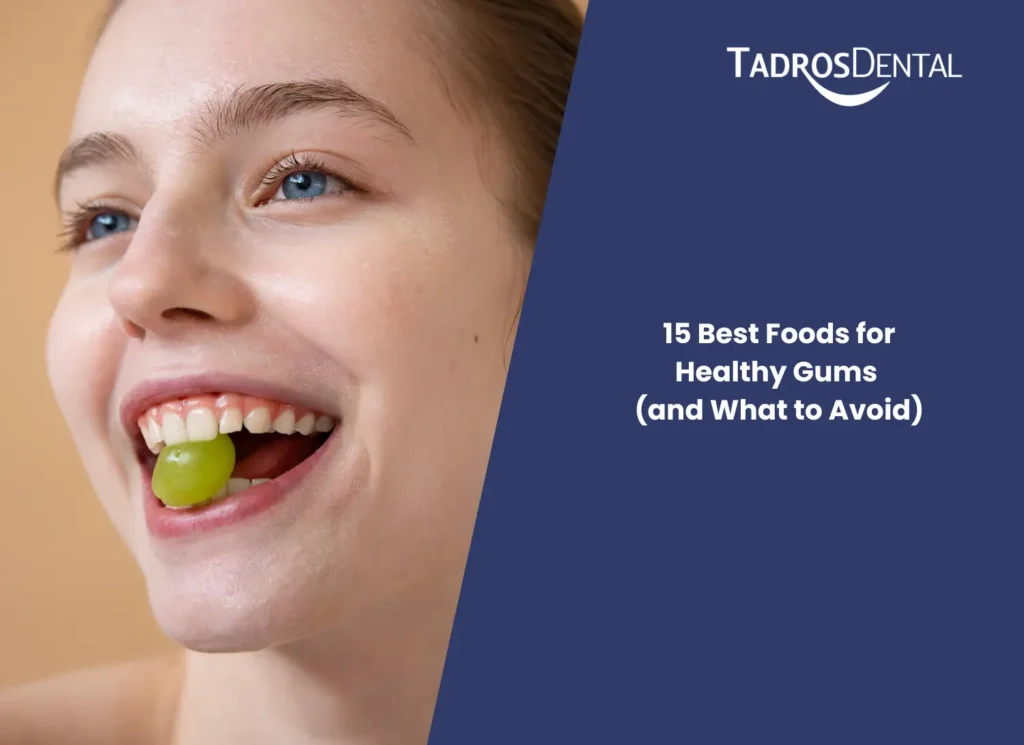
Your gums do a lot of work you probably do not think about. They hold your teeth in place, protect the roots, and act as a barrier against bacteria. What you eat plays a bigger role in gum health than most people realize. Certain foods actively support your gums, while others quietly work against them.
Below are 15 of the best foods for gum health, plus a short list of foods that can do more harm than good.
Spinach and kale are rich in vitamins A and C, both of which support healthy gum tissue and help fight inflammation.
Carrots and celery act almost like a natural toothbrush. Chewing them stimulates saliva and helps scrub away food debris.
Oranges and strawberries are high in vitamin C, which is essential for gum tissue repair. Rinse with water afterward since citrus acid can be tough on enamel.
Cheese, yogurt, and milk are rich in calcium and casein, both of which help strengthen teeth and may help neutralize acid in the mouth.
Green tea contains compounds called catechins that may help reduce inflammation and slow bacterial growth in the mouth.
Also Read: Oral Health Facts And Tips: Tooth Decay Treatments
Almonds and sesame seeds provide calcium and healthy fats without added sugar, making them a gum-friendly snack option.
Salmon and mackerel are high in omega-3 fatty acids, which have anti-inflammatory properties that may benefit gum tissue.
Simple, but effective. Water helps rinse away food particles and bacteria, and keeps saliva production steady.
Onions contain antibacterial sulfur compounds that may help fight the bacteria linked to gum disease, though the smell is a tradeoff.
These contain lentinan, a compound studied for its potential to fight the bacteria involved in plaque formation.
Firm, fibrous apples help stimulate saliva flow and gently clean the surface of your teeth as you chew.
Cranberries contain polyphenols that may help prevent plaque from sticking to your teeth. Skip the sweetened juice versions.
High in vitamin A, which supports the health of mucous membranes, including gum tissue.
Whole grains break down more slowly than refined carbs, which means less feeding of the bacteria that contribute to gum disease.
Beyond calcium, sesame seeds have a gentle abrasive texture that can help reduce plaque when chewed.
Small changes to your diet add up over time, but they work best alongside regular dental checkups. If your gums are bleeding, swollen, or tender, do not wait it out.
Book an appointment with Tadros Dental to get a proper evaluation and a plan tailored to your gum health.
1- Can diet alone reverse gum disease?
Diet helps support gum health, but it cannot reverse existing gum disease on its own. Professional cleanings and treatment are necessary for that.
2- How quickly can diet changes improve gum health?
Some people notice less bleeding and irritation within a few weeks of consistent dietary changes, paired with good brushing and flossing habits.
3- Are supplements a good substitute for these foods?
Whole foods are generally preferred over supplements since they provide nutrients in combinations your body absorbs more effectively. Talk to your dentist or doctor before starting any supplement.
4- What is the single best food for gum health?
There is no single best food. A varied diet with plenty of vegetables, lean protein, and low added sugar tends to support gum health the most consistently.