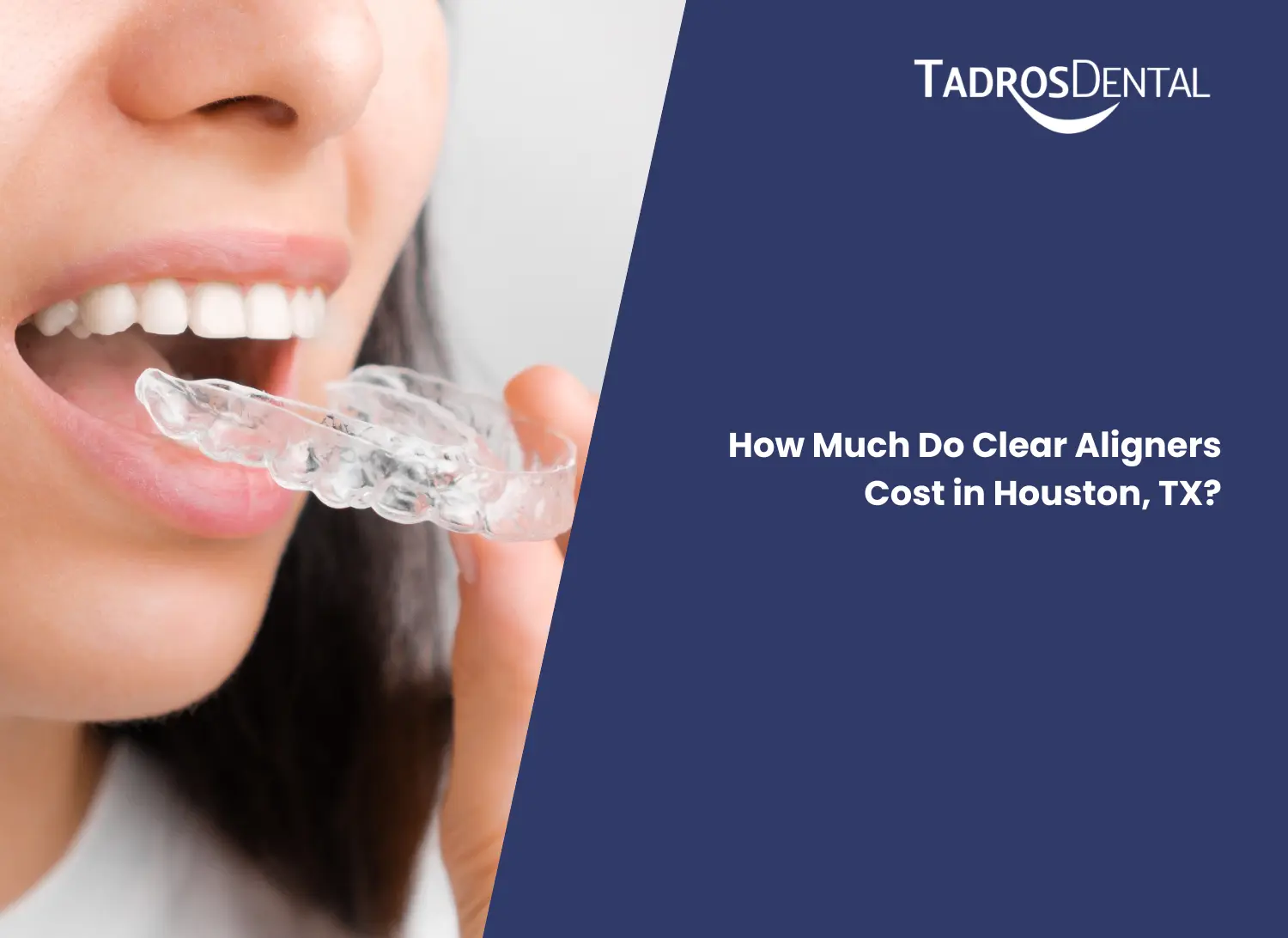
Cost is usually the first real question once someone decides they want straighter teeth. Here is what clear aligners cost in Houston, what drives that number up or down, and how it stacks up against the rest of the country.
At Tadros Dental, Clear Aligner Therapy in Houston typically runs $2,500 to $6,500 for a full course of treatment. Where you land in that range depends mostly on how much movement your teeth need and how long your case takes to complete.
A minor correction on a few teeth costs far less than a full smile realignment involving a significant overbite or crowding.
Nationally, the average cost of clear aligner treatment without insurance is $5,108, with prices ranging from $1,800 to $8,100 depending on the provider and case complexity.
Houston's typical range sits comfortably within that spread, and often below the national average, since overhead costs here tend to run lower than in major coastal cities.
A few factors move the number up or down for almost every patient.
Complexity. A minor cosmetic refresh costs far less than correcting a long-standing overbite or significant crowding.
Treatment length. More sets of aligners mean more lab fees and more check-in visits, which adds to the total.
Compliance. Aligners only work if you wear them as directed, generally 20 to 22 hours a day. Lost trays or inconsistent wear can require extra refinement aligners, which adds cost.
Insurance. Many dental PPO plans in Texas include orthodontic coverage, which can reduce your out-of-pocket cost by $1,000 to $3,000. Nationally, insured patients qualify for an average orthodontic benefit of about $1,772, with most plans covering up to $3,000.
It depends on your specific plan, but orthodontic coverage is more common than many patients expect.
Some PPO plans treat clear aligners the same way they treat traditional braces, applying a percentage of the cost up to a lifetime maximum.
Plans vary, so it's worth calling your insurer before your consultation to ask specifically about orthodontic benefits, not just general dental coverage.
Beyond insurance, a few options can lower the real cost of treatment. Flexible monthly payment plans, offered directly through many dental offices including Tadros Dental, spread the cost over time instead of requiring a large payment upfront. HSA and FSA funds can also be used toward orthodontic treatment, which effectively lowers your cost by your tax rate.
Getting quotes from more than one provider before committing is reasonable too, since pricing for similar cases can vary by a noticeable margin between practices in the same city.
The ranges above are a useful starting point, but the only way to know your actual cost is a consultation.
At Tadros Dental, we map your treatment digitally before quoting a price, so you know what you're paying for and why.
Book an appointment to get a number specific to your smile, or visit our clear aligner page to see what treatment looks like from start to finish.
1- Is the $2,500 to $6,500 range the final price, or are there hidden fees?
That range generally reflects the full treatment cost. Always confirm during your consultation whether retainers, refinement trays, and follow-up visits are included.
2- Why do some Houston clinics quote much higher prices than others?
Pricing differences usually come down to case complexity, the technology used for planning, and the experience level of the provider.
3- Will my case definitely cost less than the national average just because I live in Houston?
Not necessarily. Lower regional overhead helps keep prices competitive, but a complex case will still cost more than a simple one regardless of location.
4- Can I use CareCredit or a payment plan for clear aligners in Houston?
Many practices, including Tadros Dental, offer in-house monthly payment plans, and third-party financing options like CareCredit are widely accepted across the Houston area.
5- Does cost differ between Invisalign and other clear aligner brands in Houston?
Sometimes. Branded systems with proprietary materials can run higher than a generic, doctor-supervised aligner for a similar case, though the difference depends on your specific treatment plan.