A missing tooth can feel like a small problem in the beginning. You may chew from the other side, hide your smile in photos, or tell yourself you will deal with it later. But over time, that empty space can start creating bigger issues. Nearby teeth may shift, food may get trapped, chewing can feel uneven, and your bite may not feel the same.
That is why many patients in Houston start looking for the real price of dental bridge work. They want to know what a bridge costs, what insurance may cover, and whether it is a better choice than an implant or partial denture.
A dental bridge is one of the most common ways to replace one or more missing teeth. The American Dental Association explains that a bridge replaces missing teeth with artificial teeth and is attached to surrounding teeth for support. Unlike something removable, a fixed bridge can only be removed by a dentist.
Tooth loss is also more common than many people think. The Centers for Disease Control and Prevention (CDC)’s 2024 oral health report shows that older adults had an average of 5.6 missing teeth at ages 60 to 74 and 7.4 missing teeth at age 75 and older. That means replacing missing teeth is not just cosmetic. For many people, it is part of keeping their mouth healthy and usable
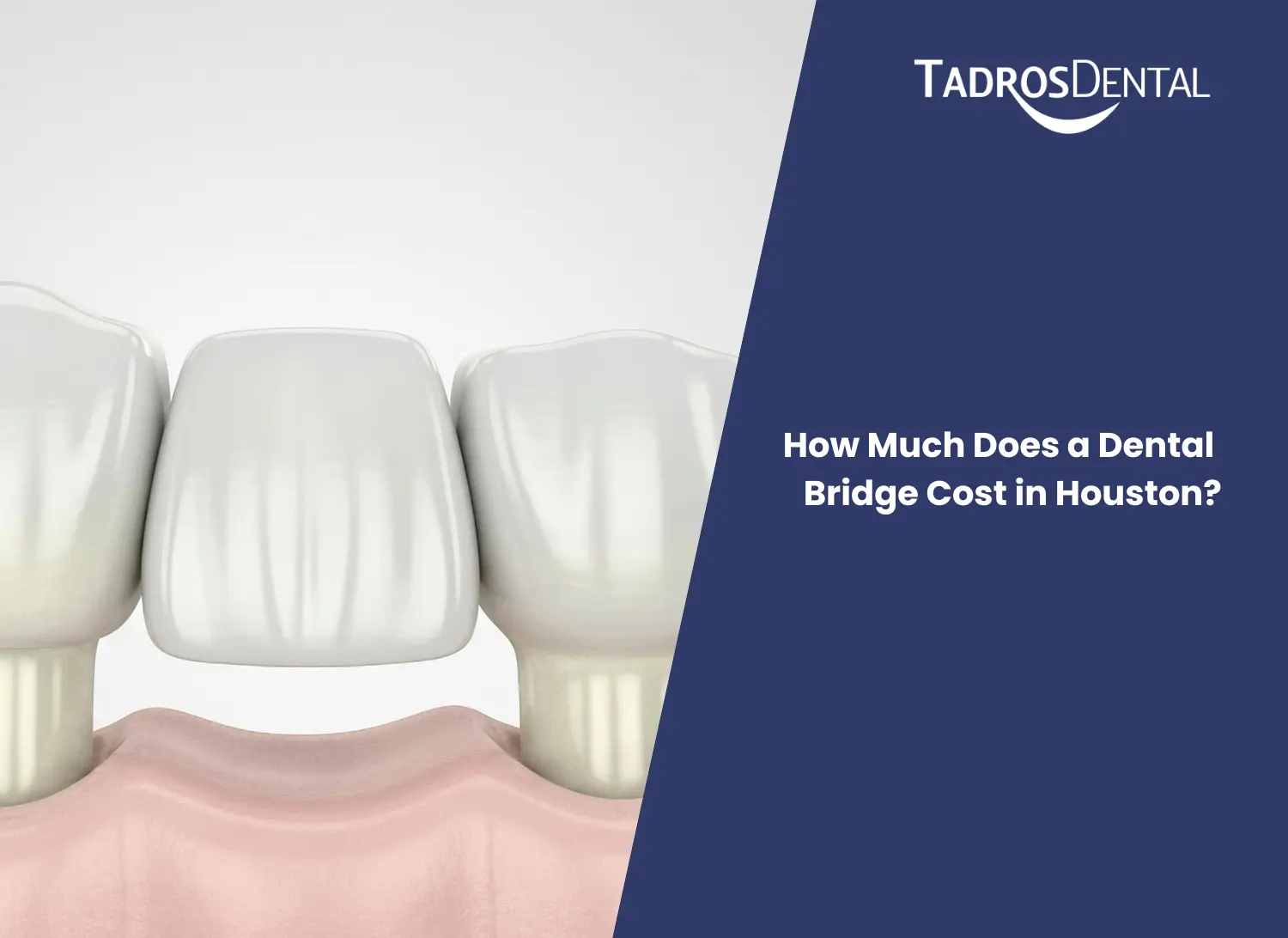
A dental bridge is a fixed dental restoration that replaces one or more missing teeth. It fills the empty space with an artificial tooth, called a pontic, and the bridge is usually supported by natural teeth or dental implants.
The American Dental Association explains that a fixed bridge replaces missing teeth with artificial teeth and is attached to nearby teeth for support. Unlike a removable appliance, a fixed bridge can only be removed by a dentist. A dental bridge may help with:
In Houston, a dental bridge can cost anywhere from about $2,000 to $5,800 for a common traditional bridge. Some smaller or less complex bridges may cost less, while larger bridges or implant supported bridges can cost much more.
The average price of dental bridge work depends on the type of bridge, the number of missing teeth, the material used, and whether other dental treatment is needed first. Houston dental cost guides commonly place traditional bridges around $2,500 to $5,800 and Maryland bridges around $1,500 to $2,500.
A simple way to understand the cost is this:
|
Type of bridge |
Common cost range in Houston |
|
Traditional bridge |
$2,000 to $5,800 |
| Maryland bridge |
$1,500 to $2,500 |
| Cantilever bridge |
$2,000 to $5,000 |
| Implant supported bridge |
$5,000 to $15,000 or more |
These are only general numbers. Your final cost can only be confirmed after an exam, X-rays, and a treatment plan.
Two people can both need a bridge, but one may pay more than the other. That does not always mean one office is expensive and another is cheap. It often means the treatment itself is different.
A bridge for one missing front tooth may be simpler than a bridge for missing back teeth. Back teeth handle stronger chewing pressure, so they may need stronger materials. A patient with healthy nearby teeth may need less prep work than someone who has cavities, old crowns, gum problems, or weak support teeth.
The cost can change because of:
This is why a dental bridge estimate should not be based only on a phone call. A real quote needs a look at the mouth, bite, and X-rays.
Dental insurance can help, but it does not always cover the full cost. Bridges are usually treated as major dental work. Many dental plans cover major services at around 50 percent after the deductible, but the exact amount depends on your plan.
For example, if your bridge costs $4,000 and your plan covers 50 percent, you may expect insurance to pay $2,000. But there is another limit to check. Many dental plans have an annual maximum, which means they only pay up to a certain amount per year.
So, if your annual maximum is $1,500 and your bridge benefit reaches that amount, you may still need to pay the rest.
Before starting treatment, ask your insurance company:
This step can save you from a surprise bill.
Without insurance, the patient usually pays the full cost. In Houston, that can often mean $2,000 to $5,800 for a traditional bridge, depending on the case.
If you do not have insurance, ask for a clear written estimate. The estimate should show what is included and what may cost extra. Also, ask about payment options before treatment starts.
Many patients without insurance look only for the lowest price. That is understandable, but a bridge is not something you want done poorly. A bridge that does not fit well can trap food, irritate the gums, damage nearby teeth, or feel uncomfortable when chewing.
A better question is not only “How much does it cost?” The better question is “What am I getting for this cost, and will it protect my mouth long term?”
When patients weigh their options, the choice usually comes down to a traditional bridge or an implant. Each works differently and suits different situations. You can read our full breakdown in dental bridge vs. implant to see how they compare on cost, lifespan, and bone health.
A traditional bridge uses the teeth beside the gap for support. These teeth are shaped and covered with crowns to provide stability for the replacement tooth. If you need crowns before getting a bridge, finding experienced dental crowns close to Houston TX can help ensure your supporting teeth are properly restored before bridge placement.
An implant-supported bridge uses dental implants for support. This option often costs more, but it may be helpful when several teeth are missing or when the nearby teeth should not be shaped. Understanding the dental implants cost in houston can help patients compare the overall investment of implant-supported options with traditional dental bridges before making a decision.
A traditional bridge may make sense if:
An implant-supported bridge may make sense if:
Cleveland Clinic notes that dental bridges can replace one tooth or a row of missing teeth, and the best type depends on the person’s oral health and needs.
For many patients, yes, a dental bridge is worth it when the missing tooth is affecting chewing, speech, confidence, or bite comfort.
A missing tooth can create slow problems. The teeth beside the gap may start leaning. The tooth above or below the gap may move because it no longer has a tooth to bite against. Food can collect in the space. Chewing may become uneven. Over time, the mouth can become harder to restore.
A bridge helps close the space and bring back function. It can also improve the smile, especially when the missing tooth is visible.
The value depends on your situation. If the support teeth are strong and the bridge is made well, it can be a practical and lasting solution. If the support teeth are weak, another option may be better.
The price of dental bridge work in Houston often starts around $2,000 and can go above $5,800 for a traditional bridge. Implant-supported bridges can cost more because they involve implants and extra treatment steps.
The final cost depends on your mouth, not just a general price list. The number of missing teeth, bridge type, material, gum health, support teeth, insurance, and extra dental work all play a role.
A dental bridge is not only about filling a gap. It can help restore chewing, protect your bite, improve your smile, and stop nearby teeth from shifting. If you are missing a tooth, getting a proper exam and written estimate is the best next step.
Ready to understand your dental bridge options in Houston?
Schedule an appointment with the expert dentist at Tadros Dental and get a clear treatment plan for your smile and budget.
A dental bridge in Houston usually costs around $2,000 to $5,800, depending on the bridge type and your dental needs.
Yes, a traditional bridge usually costs less up front than a dental implant.
Many plans cover part of the cost, but coverage depends on your dental insurance plan and yearly limit.
A dental bridge can last 10 years or more with good care and regular dental visits.
Yes, but the cavities may need to be treated first before the bridge is placed.