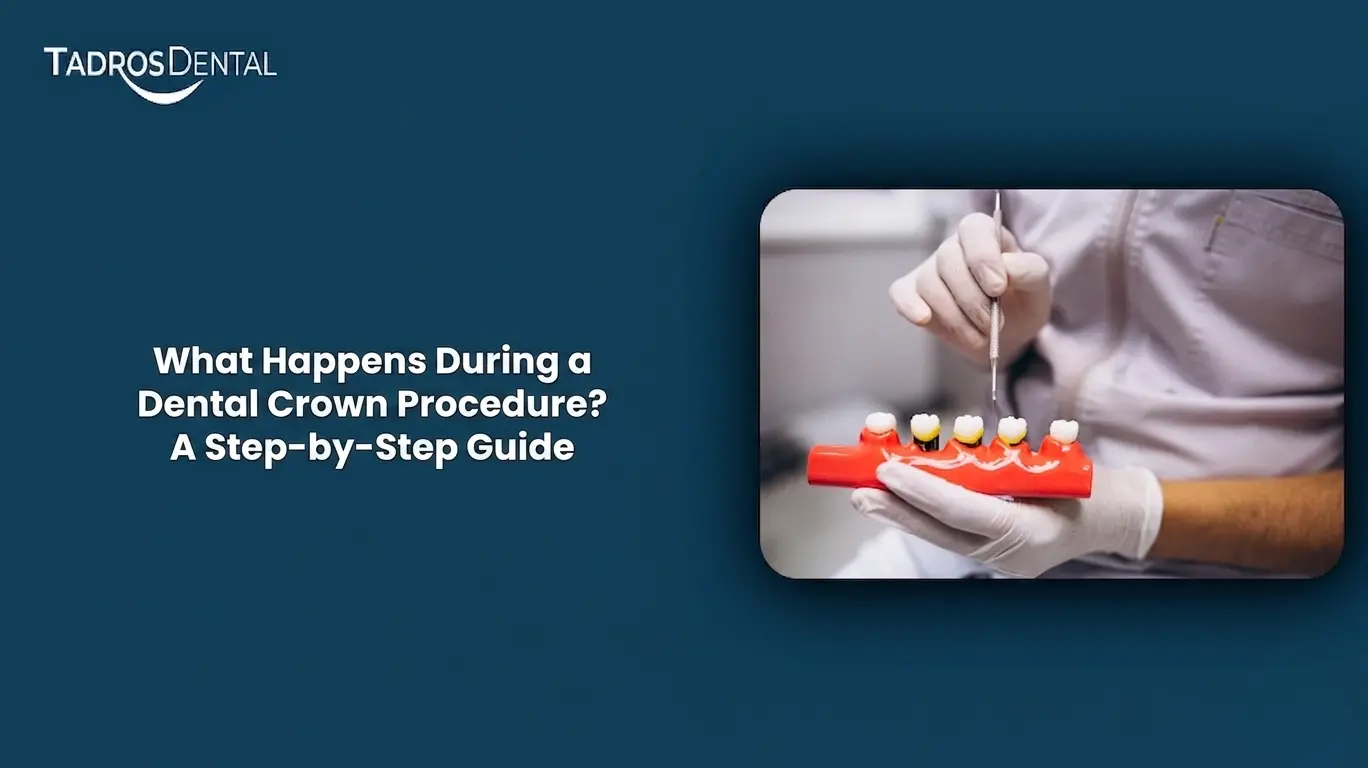
A dental crown procedure is used to restore a tooth that is weak, cracked, worn down, or too damaged for a filling. The treatment usually involves examining the tooth, numbing the area, removing damaged structure, shaping the tooth, taking an impression or digital scan, and placing a custom-made crown. Understanding each step can help reduce anxiety and make it easier to know what to expect before, during, and after the procedure.
This guide is designed for our patients who want to know exactly what to expect. We’ll walk through the process, the technology we use to ensure a perfect fit, and how to care for your new smile so it lasts for decades.
A dental crown is essentially a custom-fitted "cap" that covers the entire visible portion of a tooth. At Tadros Dental, we view crowns as a way to hit the "reset button" on a damaged tooth, restoring its shape, size, strength, and appearance.
A dental crown procedure is usually done in a few simple steps. In most cases, it takes two visits unless a same-day crown is available.
The dentist examines the tooth and may take X-rays to check the roots, surrounding bone, and amount of damage. If there is deep decay, infection, or nerve damage, that may need to be treated first.
A local anesthetic is used to numb the tooth and nearby gum tissue. You may feel a brief pinch from the injection, but the procedure itself should mostly feel like pressure, not pain.
The dentist removes decay, old filling material, or damaged tooth structure. If the decay is detected earlier, a filling may sometimes restore the tooth instead of requiring a crown. Knowing the average cost tooth filling can help patients understand the available treatment options.
Once the tooth is prepared, an impression or digital scan is taken. This creates a model of the tooth and bite, which is used to make a crown that fits properly.
If the permanent crown is not ready the same day, a temporary crown is placed to protect the tooth. This stays in place until the final crown is ready.
At the next visit, the temporary crown is removed, and the permanent crown is checked for fit, shape, color, and bite. Small adjustments may be made if needed.
Once the fit is correct, the crown is cemented into place. After that, the tooth is restored and ready to function like normal.
Thanks to CAD/CAM technology, many patients now have a choice.
These are the gold standard for aesthetics. They mimic the translucency of natural teeth and are incredibly strong, making them ideal for both front and back teeth.
While less common today for aesthetic reasons, gold is incredibly biocompatible and "kind" to the opposing teeth. It’s a great choice for back molars if you have a very heavy bite or grind your teeth.
PFMs offer a balance of strength (from the metal substructure) and aesthetics (from the porcelain coating). However, they can sometimes show a dark "gray line" at the gum line over time.
Also Read: Types of Dental Crowns: Cost, Procedure, Lifespan & Best Material Guide
It is normal to feel some mild sensitivity or gum soreness. Avoid extremely hot or cold drinks and stay away from hard, crunchy foods like ice or nuts for the first day to let the cement fully cure.
According to the American Dental Association (ADA), the lifespan of a crown depends heavily on oral hygiene. While the crown cannot decay, the natural tooth underneath it still can.
Dr. Mina Tadros often says:
"A dental crown isn't just a cap; it’s a protective seal that preserves the natural root structure. When we use high-grade zirconia, we aren't just fixing a tooth; we are engineering a restoration that can last twenty years or more."
The crown procedure is performed under local anesthesia, so you should not feel any pain during the treatment. You may experience some mild gum tenderness or sensitivity for a few days following the appointment, which can be managed with over-the-counter pain relievers.
No, a root canal is not always a prerequisite for a crown. We only recommend a root canal if the tooth's pulp is infected or dead; however, many crowns are placed simply to protect a tooth from fracturing or to replace a large filling.
On average, a high-quality crown lasts between 10 and 15 years. With excellent oral hygiene, regular checkups at Tadros Dental, and avoiding habits like ice-chewing, many of our zirconia restorations last 20 years or longer.
Once the permanent tooth crown process is complete and the numbness wears off, you can eat most foods. However, we recommend avoiding extremely sticky or hard foods (like hard candy or ice) to prevent chipping the porcelain.
A same-day crown is milled in our office in one visit using digital technology, while a traditional crown requires two visits and a temporary cap while a lab fabricates the final piece. Both offer excellent durability, though lab-made crowns are sometimes preferred for complex cosmetic cases.