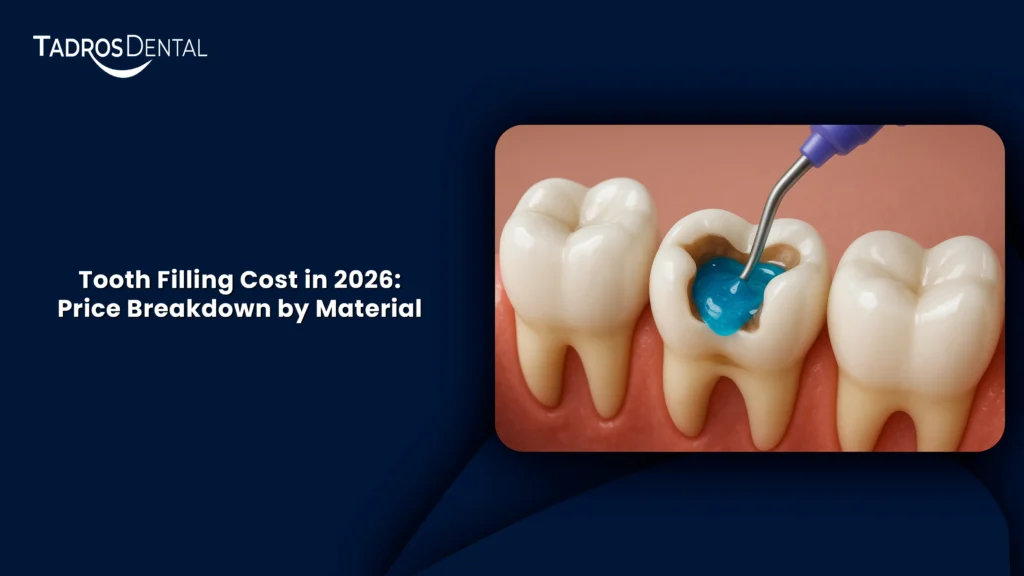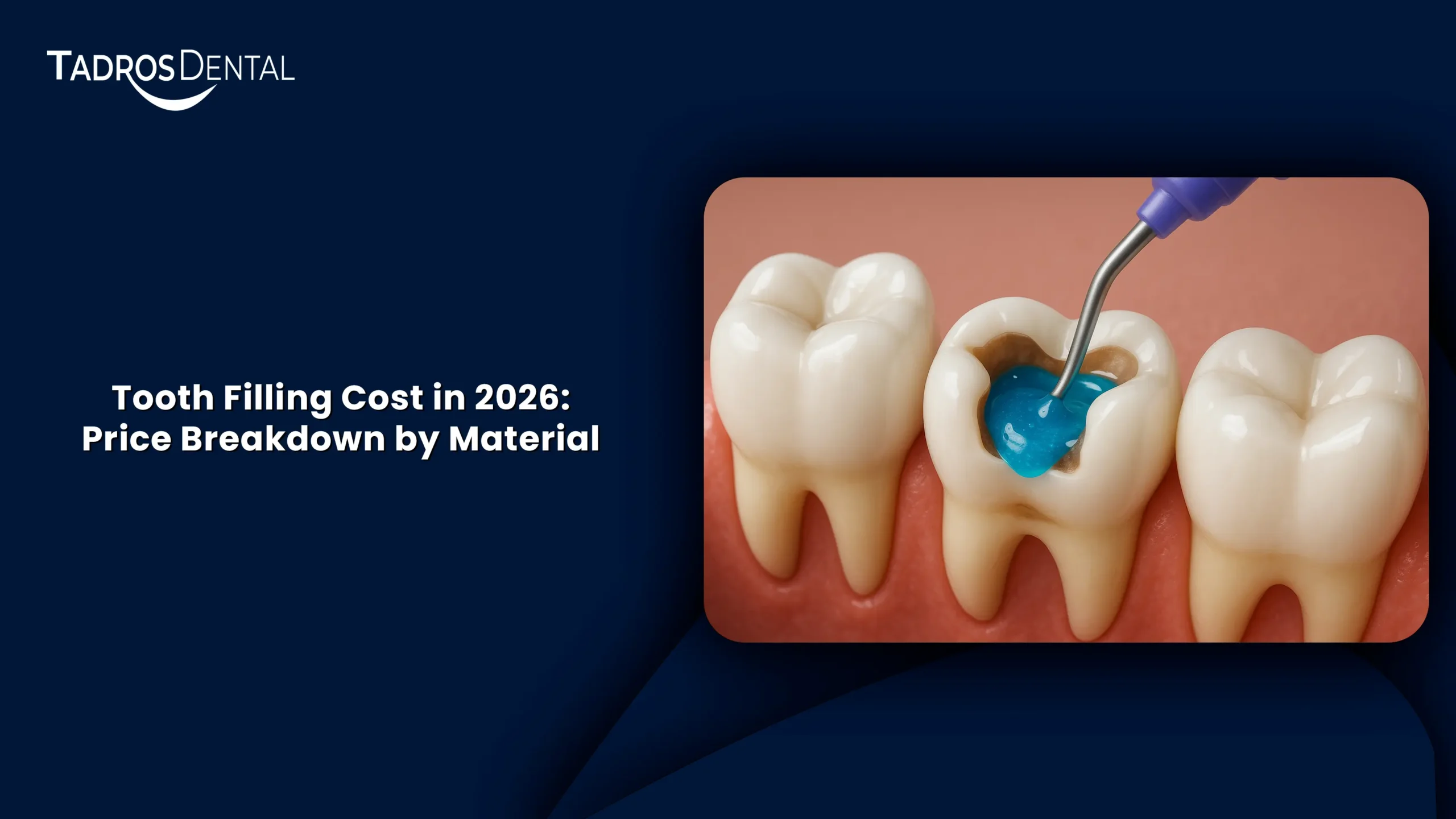
A cavity may start small, but many people wait because they worry about the cost. This delay can make the problem worse.
Many people wait because they are unsure about the cost. That is common, but waiting can make the tooth harder and more expensive to treat later.
A simple filling can often fix early decay. But if the cavity grows deeper, the tooth may need a crown, root canal, or another treatment.
In this blog, you will learn how much a tooth filling may cost, why prices vary, and what to expect if you have insurance or pay out of pocket.
The average tooth filling cost in 2026 ranges from $100 to $1,800+, depending on the material, cavity size, and tooth location.
A filling does not have one fixed price. Silver fillings usually cost less. Tooth-colored fillings cost more. Ceramic and gold fillings are often higher in price because they take more time, material, and detailed work.
Cost is one reason many people delay dental care. The CDC says 18.6% of adults ages 18 to 64 skipped needed dental care because of cost, and nearly 21% of adults ages 20 to 64 have at least one untreated cavity.
Your dentist can give the right estimate only after checking the tooth. That is why filling costs can vary from person to person.
Also Read: Cavity Filling Procedure Explained What Happens at the Dentist
The cost of a filling is usually charged per filling, per tooth. This means one cavity on one tooth has its own cost. If you need fillings on two teeth, the price is usually counted separately for each tooth.
The price also changes because not all cavities are the same. A small cavity on one surface of the tooth is easier to fix. A deeper cavity, or one that affects more than one side of the tooth, takes more time, material, and care.
The filling material matters too. Some materials cost less and work well on back teeth. Some look more natural. Others are used when the tooth needs more strength or a custom repair.
Here is a clear price guide for 2026:
| Filling Material | Common Use | Estimated Cost Per Filling, Per Tooth |
|
Amalgam |
Back teeth and lower-cost repairs | $100 to $350 |
|
Composite resin |
Front teeth and natural-looking repairs | $150 to $450 |
| Glass ionomer | Small cavities or root areas |
$75 to $250 |
| Gold | Strong back-tooth repairs |
$350 to $900+ |
| Porcelain or ceramic | Larger tooth-colored restorations |
$700 to $1,800+ |
These are average price ranges. Your actual cost can be lower or higher based on the tooth, cavity size, number of surfaces, insurance, and whether the tooth needs a simple filling or a more custom restoration.
Amalgam is the silver filling that many people know. It is often used on back teeth because it is strong and costs less than most other options.
It works well when the filling is not easy to see. The main drawback is the color. Since it is silver, it does not blend with the tooth. For this reason, many people avoid it for the front teeth.
Composite resin is tooth-colored, so it looks more natural. Dentists often use it for front teeth, side teeth, and other areas that show when you talk or smile.
It costs more than amalgam because it takes more time to place. The dentist has to bond it to the tooth, shape it, harden it, and polish it. For many people, a composite is the middle choice. It looks good, works well, and does not cost as much as ceramic.
Glass ionomer is used for certain types of cavities. It can work well near the gumline, on root surfaces, on baby teeth, or in areas that do not take heavy chewing pressure.
One benefit is that it can release fluoride. This may help protect the tooth area from more decay. It is not the strongest option for large back-tooth fillings, so dentists use it only when it fits the case.
Gold is strong and can last a long time. Some people still choose it for back teeth because it can handle chewing pressure very well.
The issue is the price. Gold costs much more than amalgam or composite. It also stands out in the mouth, so it is not a common choice for people who want a natural look.
Porcelain and ceramic are used when a tooth needs a strong and natural-looking repair. These restorations are often used for larger cavities where a basic filling may not be enough.
They cost more because they can involve digital scans, custom shaping, lab work, or an extra visit. In many cases, ceramic or porcelain is closer to an inlay or onlay than a simple filling. That is why the price is higher.
Also Read: Types of Tooth Fillings: Pros, Cons, and Material Choices
Material is only one part of the cost. The final price also depends on the tooth and the amount of repair needed.
A small filling on one surface will usually cost less. A larger filling that covers two or three surfaces will cost more. A back molar can also cost more because it is harder to reach and takes more chewing pressure.
The cost may also increase if an old filling has to be removed, if X-rays are needed, or if the cavity is close to the nerve. Insurance can change the final price, too, especially if your plan covers silver fillings differently from tooth-colored fillings.
The best way to know your real cost is to get an exam and a written estimate. That estimate should show the tooth number, material, number of surfaces, insurance share, and your expected out-of-pocket cost.
The tooth filling cost without insurance means you pay the full amount yourself. This can range from under $150 for a small filling to over $1,000 for a lab-made ceramic restoration.
A small cavity often costs less because it needs less material and less chair time. A deeper cavity may cost more because the dentist must remove more decay, rebuild more tooth structure, and shape the filling with care.
If you do not have insurance, ask for a written estimate before treatment. The estimate should show:
This helps you avoid surprise costs. It also helps you compare options in a fair way.
The tooth filling cost with insurance depends on your dental plan. Many plans cover fillings as a basic dental service. Some plans may pay 70% to 80% of the allowed cost after you meet your deductible.
Still, coverage can change from one plan to another. Your plan may cover silver fillings on back teeth but may pay less for tooth-colored fillings in the same area. If you choose composite resin for a back molar, you may need to pay the difference.
Before treatment, ask your dental office to check your benefits. Ask these questions:
This step gives you a clearer view of the final price.
A filling works best when the cavity is small or medium in size. It helps repair the damaged part of the tooth and keeps the tooth strong enough for normal use.
But sometimes, a filling is not enough. If the cavity is too large, the tooth is badly cracked, or too much tooth structure is weak, your dentist may suggest a crown or onlay instead. These options cover and protect more of the tooth.
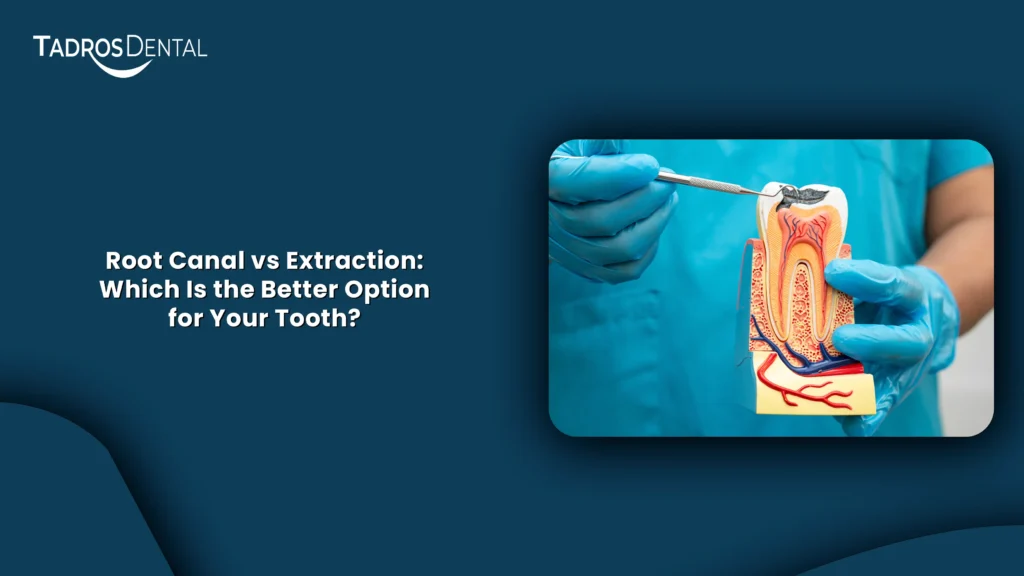
If the decay reaches the inside of the tooth, where the nerve is, a filling alone will not fix the problem. In that case, a root canal may be needed before the tooth can be restored.
This is why two dental estimates can look very different. A small cavity may only need a filling. A badly damaged tooth may need more treatment, so the cost will be higher.
The most practical way to keep the final bill lower is to treat decay early, before the tooth needs a larger restoration. Based on current public cost ranges, simple direct fillings usually cost far less than ceramic or other indirect restorations.
It also helps to ask for a pretreatment estimate if insurance is involved. Current plan documents specifically advise patients to request this when they need more clarity on coverage and benefits. It is one of the best ways to avoid surprises.
Staying in-network can lower what you pay, and checking whether your plan treats fillings as basic care can give you a better idea of the final share. If appearance matters, ask whether a tooth-colored option is covered the same way on front teeth and back teeth, because that detail changes costs more often than patients expect.
The tooth filling cost depends on the material, tooth location, cavity size, and insurance plan. A basic filling may cost a few hundred dollars. A porcelain or ceramic restoration may cost much more.
Before choosing a filling, start with a dental exam and ask for a written estimate. This helps you understand your cost, your material options, and what your insurance may cover before a small cavity turns into a bigger problem.
Book a visit with Tadros Dental for a clear exam, filling options, and simple guidance based on your tooth’s condition. Connect with us to schedule your appointment.
Without insurance, a tooth filling may cost $200 to $600 in many cases. A small filling can cost less, while a large cavity can cost more.
The tooth filling cost with insurance varies by plan, but many plans classify fillings as basic care. One current plan example pays 80% after the deductible for in-network basic care that includes fillings.
Back teeth take more chewing pressure, and larger molar restorations may involve more surfaces or stronger materials. Some plans also limit coverage for tooth-colored fillings on posterior teeth, which can raise your share.
No. Some plans cover composite fully on front teeth, but only pay the silver filling allowance on back teeth. In that case, the patient pays the difference.