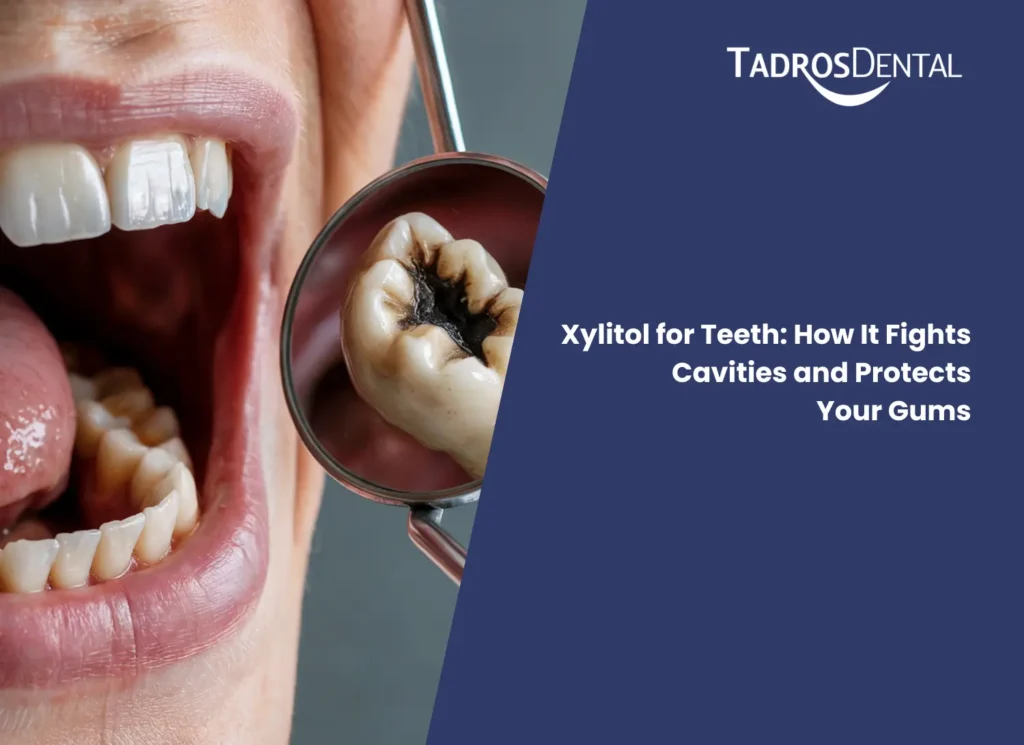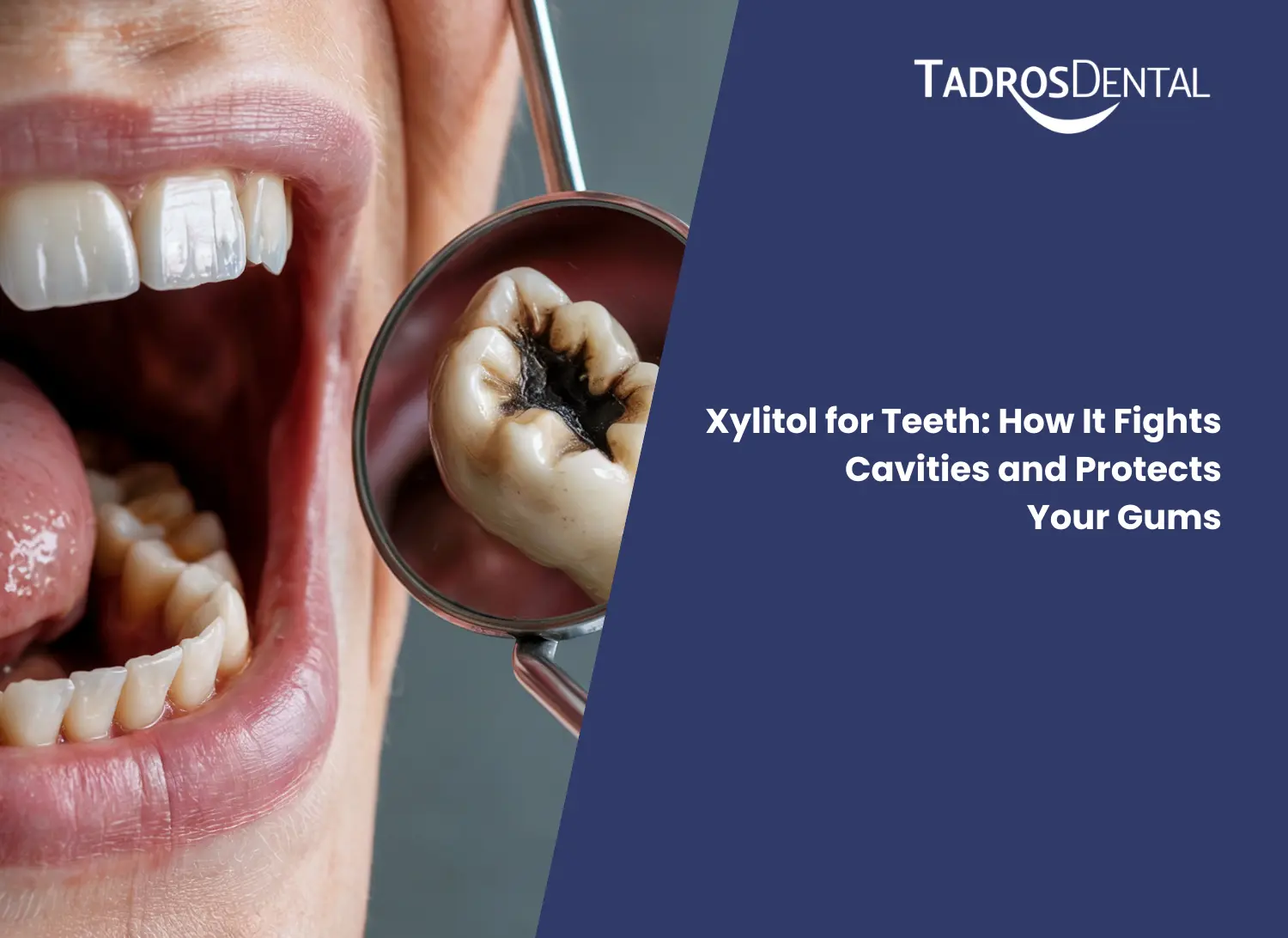
Cavities do not happen overnight. They form slowly, one snack at a time, as bacteria in your mouth feed on sugar and produce acid.
That acid wears down enamel. Over months and years, this leads to holes in your teeth. But there is a simple ingredient that can slow this whole process down: xylitol.
Xylitol is a natural sugar alcohol found in small amounts in fruits and vegetables. It tastes sweet like sugar, but your mouth bacteria cannot break it down and use it as fuel.
You have probably seen xylitol listed on sugar-free gum or mints. It is not just a sugar substitute. It actually works against the bacteria that cause tooth decay.
Yes, and here is why. The main bacteria responsible for cavities is called Streptococcus mutans. This bacteria loves sugar. It eats sugar and produces acid as a byproduct, and that acid is what erodes your enamel.
Xylitol looks like sugar to these bacteria, so they try to consume it the same way. But they cannot process it properly. Over time, this disrupts their ability to grow and produce acid. Basically, xylitol starves the bacteria that would otherwise be attacking your teeth.
Regular exposure to xylitol, especially several times a day, can also reduce how well these bacteria stick to your teeth in the first place. Less bacteria sticking around means less plaque buildup.
Cavity prevention gets most of the attention, but xylitol offers a few other benefits worth knowing:
Also Read: 6 Cavity Care Essentials: A Complete Guide for 2026
Almost anyone looking to reduce their cavity risk can benefit from adding xylitol to their routine. This includes:
One important safety note: xylitol is toxic to dogs, even in small amounts. Keep xylitol gum, mints, and toothpaste well out of reach of pets.
You do not need to overhaul your whole routine. A few simple swaps go a long way:
Xylitol is a small change that can make a real difference in your long-term dental health.
If you are dealing with frequent cavities or want to build a stronger prevention routine, the team at Tadros Dental can walk you through what will work best for your specific needs.
FAQs
1- Is xylitol safe for daily use?
Yes, for most people it is considered safe for daily use in the amounts found in gum, mints, and toothpaste. Some people notice mild digestive upset if they consume large amounts at once.
2- How long does it take to see benefits?
Most dental professionals suggest consistent use over several weeks to months before noticing a meaningful difference in cavity risk, since it works gradually by changing the bacterial environment in your mouth.
3- Can children use xylitol products?
Yes, xylitol gum and mints are commonly recommended for children old enough to safely chew gum. Always check with your dentist for age-appropriate recommendations.
4- Does xylitol replace brushing and flossing?
No. Xylitol is a helpful addition to your oral care routine, not a substitute for brushing twice a day and flossing daily.