Whenever you smile, do people see a chip on one of your front teeth? Or even after the whitening procedure, do your stains still peek in your smile? None of this is a medical emergency, yet it nudges your confidence. That is usually when people start asking about dental veneers. The idea is simple. A thin, custom shell covers the front of a tooth to change color, shape, or both, and the tooth underneath stays largely intact.
In this article, we’ll help you understand the cost, types, benefits, and procedure of dental veneers so that you can make an informed decision. For a comprehensive guide to cosmetic dentistry, see our guide to cosmetic dentistry.
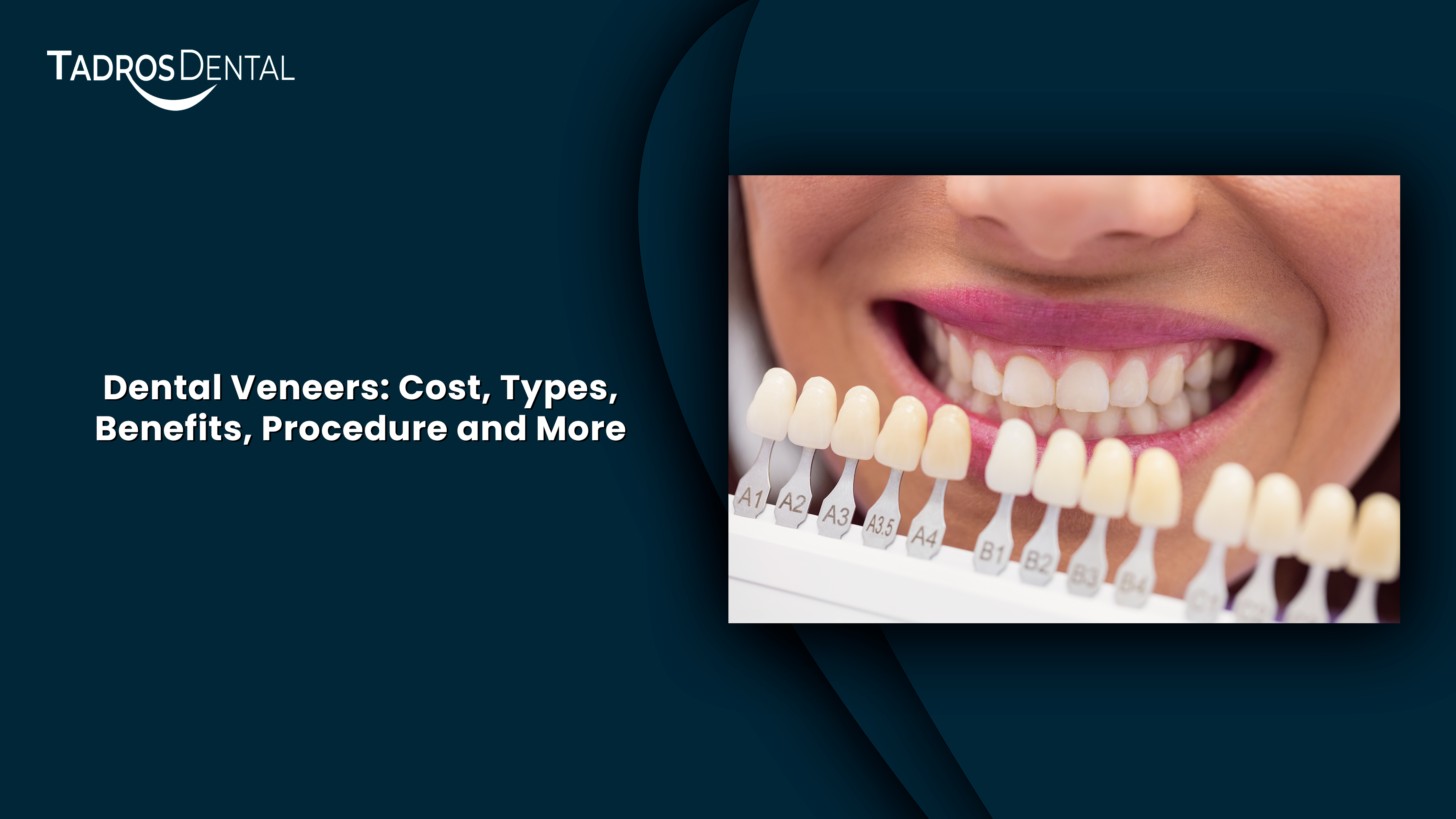
A veneer is a very thin cover that is composed of porcelain or a tooth-coloured resin. The dentist gouges it to fit your bite and your smile line, which is then glued to the face of the tooth. The change does not appear as a set of replacements, as the shell is thin and personalized, rather than an upgrade to your own teeth. Stubborn discoloration that ignores whitening can be masked. Little gaps and short edges can be balanced. A single “crooked-looking” tooth that is only slightly rotated can be brought into line visually if the case is chosen with care.
People sometimes assume veneers are only about bright white Hollywood smiles. However, they are among the popular cosmetic dental procedures helping many achieve natural, confident smiles. They can do that, but more often the best cases are quiet. The teeth simply look even, clean, and proportionate. Friends register the change but cannot quite name it, which is usually the goal.
Most folks try whitening first. When bleach cannot reach intrinsic stains, or when cracks and chips keep catching the light, veneers become attractive. They are also a way to refine the last five percent after orthodontic care. Aligners can move teeth into better positions. Veneers can then tidy the edges, adjust a few lengths, and lock in a shade that holds under coffee, tea, and red wine. If you have a timeline, like a wedding or a career move with lots of headshots, veneers let you plan a result and live with it without fuss. When those don’t work, exploring other cosmetic dentistry options can help refine your smile.
There are two main paths, and a third that sits within one of them.
Veneers are made of ceramics in a laboratory and are poured into porcelain. The substance bounces around with light, making it look like your enamel, hence the reason why good porcelain looks natural both on and off camera. The majority of porcelain cases require two visits. The former is to be used in the planning and light preparation, and the latter r to be used in bonding.
Resin is used in making composite veneers. They can be sculpted by the dentist in the seat, or made by a lab and bonded by the dentist. A composite can be repaired more easily when you chip an edge. It may appear very good, particularly in the early years, and is inclined to receive surface stains sooner than porcelain, and is generally in need of renewal sooner. For an in-depth comparison, read our detailed article on comparing dental bonding vs veneers.
Ultra-thin or no-prep porcelain is a special case. The dentist places very thin ceramic with little or no drilling when the alignment is good and when you do not need a big color jump. It preserves enamel, which is always a plus. It does not fit every mouth.
If you feel torn between options, ask your dentist to show you photos of cases they completed that are similar to your teeth. Pay attention to the way edges meet the lip and how the canine to central incisor line looks in natural light. That usually tells you more than a technical lecture ever could.
Read More: Top Cosmetic Dental Treatments: What’s New This Year?
You see wide ranges when you search online because Dental veneers cost depends on several moving parts. Material is one. Location and the lab the dentist uses are two more. The number of teeth matters, since the cost is typically per tooth, and the front six to eight teeth often set the smile line. Porcelain usually costs more than composite since it involves a lab and a second appointment. Composite is often lower at the start, especially if placed directly in one visit, yet it may need earlier touch-ups or replacement.
There can be add-on items that are worth knowing about before you compare fees. A digital smile design or wax-up lets you preview the shape and length. Temporary veneers keep the teeth comfortable between visits in porcelain cases. A night guard protects the work if you grind. If tiny changes to the gumline are needed to balance height, that is a separate procedure. Insurance usually treats veneers as cosmetic, so plans rarely contribute. Many offices offer payment options. The smoothest experience is the one with a written plan that lists the fee per tooth, any design or temporary fees, the guard if needed, and any other steps you agree to up front.
The first benefit is control over shade and shape. Instead of fighting stains every few months, you choose a color and keep it. You can ask for subtle brightening rather than a drastic jump, so the change looks believable in your face. You also gain symmetry. A lateral incisor that always looked a little short can match its partner. Corners that broke and rounded over time can regain definition. When edges align with your lower lip during a natural smile, photos simply look better.
There is a practical side as well. Porcelain is hard and smooth. It is also not easy to stain and maintain a shiny look when given simplistic care. Edges that used to chip under light wear are less likely to catch. If your work or social life puts you in front of cameras and people, that stability pays off in confidence. You do less checking and more living.
Read More: Why Porcelain Veneers Are a Popular Choice for Smile Makeovers
Veneers are a good option if you have healthy teeth and gums. However, any active tooth decay, cracks that require full coverage, or untreated gum disease must be addressed before considering cosmetic treatments. Having enough enamel is important for successful bonding, so heavy tooth wear or large old fillings may affect the treatment plan. Severe bite issues should be treated with orthodontics before getting veneers. If you grind or clench your teeth, using a custom night guard after treatment is recommended. It is also important to understand that some tooth preparation is permanent, and maintaining regular dental cleanings helps ensure long-term satisfaction. Additionally, if a tooth has significant damage, a crown might be more suitable than a veneer. For more information, you can explore the differences between dental bonding vs veneers to find the best option for your needs.
A first visit is part conversation and part records. Your dentist studies how your lips and teeth move when you talk and when you smile. Photos and scans help map your bite. You talk about shapes you like. Some want a gentle, rounded look. Others prefer a bit of youthful edge. A mock-up or digital design shows a preview. People often take a day or two to live with the proposed length before committing.
When porcelain is the preferred material, a very thin coat of enamel is made such that the veneers will fit flatly and not appear thick and clumsy. You will be comfortable in this step with a local anesthetic. Templaries cover the teeth and allow you to test the appearance over a few days. During the visit, the dentist tries the porcelain, fits and shades, and bonds each shell under clean and dry isolation. The bite is checked in motion, so you do not hit a single edge too hard. A polish brings up the final luster. If a composite is chosen and placed directly, all of this may be completed in a single appointment.
Preparation for porcelain is permanent. Once a tooth is reduced, it will always need a cover on that surface. Some people feel brief sensitivity to cold after preparation or bonding. That usually fades within days. Veneers can chip or debond. Planning and a protective guard reduce that risk, yet it never goes to zero. If you bleach after treatment, natural teeth may lighten while porcelain does not, which can create a mismatch. That is why whitening comes first when it is part of the plan. Veneers are also not a cure for deep structural problems. A tooth with a massive old filling or a crack that runs under the gum may need a crown rather than a veneer.
Treat veneers like excellent enamel. Brush twice daily with a soft brush. Floss every day. Clean and request your hygienist to use pastes and tools that do not damage ceramic and resin surfaces. Do not gnash your teeth on ice or in packages. If you grind, wear the guard your dentist makes. With that level of care, porcelain typically serves well for many years, and composite provides a handful of good years before a refresh, sometimes longer if you are gentle on your teeth and keep stains in check.
Try a consult that includes photos, a scan, and a simple preview. Ask to see the dentist’s own cases. Make sure you understand the types of dental veneers and the plan for your enamel. Read the fee sheet so that dental veneers are not a surprise. If the proposal fits your goals, the benefits of dental veneers show up in small ways every day. You smile without second-guessing. You stop hiding in photos. You spend less energy worrying about stains and edges, and more energy on the moments that put the smile there in the first place.