If you are unhappy with chips, stains, small gaps, or uneven front teeth, veneers may seem like a simple fix. But not every cosmetic concern should be treated the same way. The CDC reports that many adults still live with untreated tooth decay, which is why any smile upgrade should start with a full dental exam, not just a cosmetic goal. This article explains what dental veneers are, who they help, how the process works, how much they may cost, and when another treatment may make more sense.
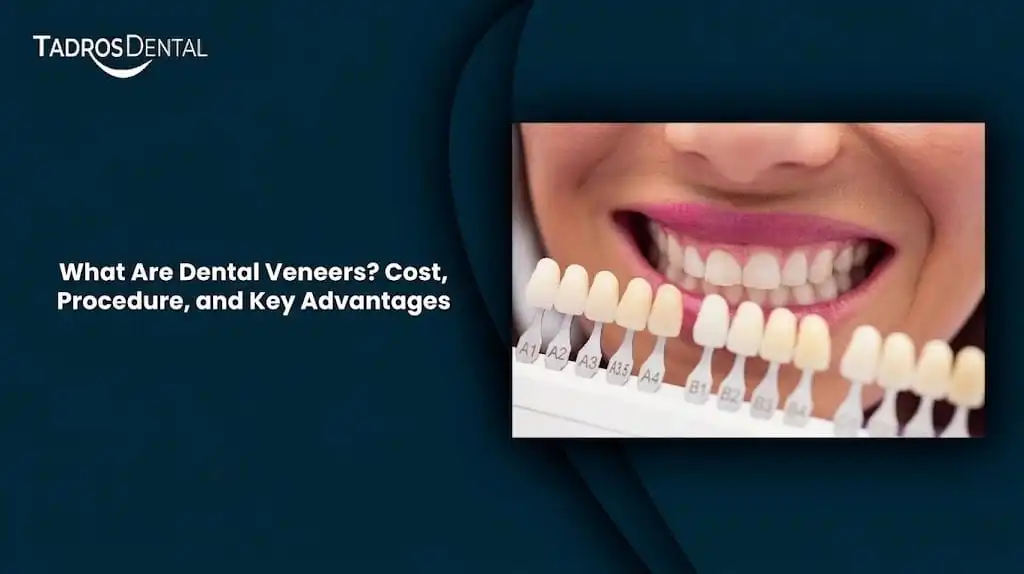
Dental veneers are thin, custom-made shells placed over the front surface of teeth to improve color, shape, size, or symmetry. They are commonly used to show teeth in the smile zone and are usually made of porcelain or composite resin. Teeth veneers are considered a cosmetic treatment, which means they improve appearance but do not replace the need to treat decay, gum disease, or bite problems first.
It is also important to clear up one common misunderstanding. Dental veneers for missing teeth are not the right solution when a tooth is completely gone. Veneers need an existing tooth surface for bonding. Missing teeth are usually replaced with options such as implants, bridges, or dentures.
One of the main reasons veneers are so popular is that they can improve multiple cosmetic concerns at the same time. Instead of treating each issue separately, veneers can create a more balanced overall result.
Some of the key benefits include:
Porcelain veneers also resist staining better than natural enamel, making them a strong choice for people who want long-lasting brightness.
Veneers are usually recommended for cosmetic concerns rather than major structural problems. They work best when the teeth and gums are otherwise healthy.
Small chips on front teeth can make a smile look uneven. Veneers can cover those chipped areas and restore a smoother appearance.
Veneers can help close small spaces between teeth, especially when the gap is minor and the teeth can be reshaped visually.
Some stains do not respond well to whitening. Veneers can cover deep discoloration and create a brighter, more consistent shade.
Teeth that look too short, slightly misshapen, or uneven can often be improved with veneers.
Teeth that have become worn down over time may look flat or dull. Veneers can restore a more youthful and balanced appearance.
There are several types of veneers, and each one has different advantages.
Porcelain veneers are the most common option. They are known for their natural appearance, stain resistance, and durability. They are usually made in a dental lab and placed in more than one visit.
Composite veneers are made from tooth-colored resin. They are often more affordable than porcelain and can sometimes be completed in one appointment. They are a good option for minor cosmetic changes, although they may not last as long.
No prep veneers are thinner and require little to no enamel removal in selected cases. They can be a more conservative choice, but they are not suitable for every smile.
| Type | Main Material | Tooth Preparation | Best Known For | Usual Tradeoff |
| Porcelain Veneers | Ceramic or porcelain | Usually yes | Best esthetics and stain resistance | Higher cost |
| Composite Veneers | Composite resin | Minimal or sometimes none | Lower upfront cost and easier repair | Shorter lifespan |
| No Prep Veneers | Ultra-thin ceramic or composite | Little to no | Conservative approach | Not suitable for every case |
Also Read: Porcelain vs. Composite Veneers: Your Guide to a Stunning Smile
This is one of the most important parts of the decision-making process.
Veneers are usually best when the tooth is healthy enough, and the main issue is cosmetic. They cover only the front surface and are often chosen for chips, stains, mild gaps, and shape problems in visible teeth.
Crowns are usually the better choice when a tooth is weak, broken, heavily filled, root canal-treated, or badly worn down. A crown covers the whole tooth and offers more structural protection.
Bonding is often the most conservative and least expensive option for small chips, tiny gaps, or minor reshaping. It usually requires little or no enamel removal, can often be done in one visit, and is reversible in many cases. But it does not resist wear and staining as well as porcelain veneers.
In simple terms:
The veneer process usually happens over a few stages.
The first step is a consultation. The dentist examines your teeth, gums, and bite to see whether veneers are a good fit. This stage is important because not every smile concern should be treated with veneers.
For traditional veneers, a small amount of enamel is usually removed from the front of the tooth. This helps the veneer sit naturally and prevents it from looking bulky.
Once the teeth are prepared, impressions or digital scans are taken. These are used to create custom veneers that fit your smile properly.
In some cases, temporary veneers may be placed while the final ones are being made.
At the final visit, the veneers are checked for fit, shape, and shade. Once everything looks right, they are bonded to the teeth.
The lifespan of veneers depends on the type of material used and how well they are cared for.
Their longevity can be affected by several factors, including:
Good daily care and regular checkups can help veneers last longer.
Interesting Fact: A 2024 review found that dental veneers generally show a high survival rate, above 90 percent for more than 10 years, with preserved enamel playing a major role in success. Another review reported a 10-year estimated survival rate of 95.5 percent for porcelain laminate veneers in the studies analyzed.
How long veneers last depends on more than the material alone. Longevity is affected by how much enamel remains, how well the veneers are bonded, whether you grind or clench, how well you clean around the margins, and whether you bite hard objects like ice or pens.
The cost of dental veneers can vary widely based on the material used, the number of teeth being treated, the complexity of the case, and the overall treatment plan. In most cases, porcelain veneers cost more than composite veneers because they involve custom lab fabrication and are known for better durability and a more natural appearance.
Porcelain veneers often range from about $900 to $2,500 per tooth. Composite veneers are usually more affordable, with costs commonly starting lower than porcelain. The final price can still vary depending on whether the veneers are placed directly in the office or made in a lab.
Several factors can influence the total cost of treatment:
For example, if a patient needs gum treatment, cavity care, or bite correction before veneers can be placed, the total cost may increase.
Insurance usually does not cover veneers because they are considered cosmetic. Partial coverage may be possible in some cases if the treatment is needed for functional or restorative reasons, but it depends on your plan.
Check your benefits and ask for a written estimate before treatment so you know your out-of-pocket cost.
Many dental offices offer payment plans for veneers since they are often an elective treatment. Options may include monthly payments or phased treatment for multiple veneers. Ask about financing during your consultation to understand your options.
Recovery after dental veneers is usually quick. Once the numbness wears off, most patients can return to normal activities and eat as usual.
To help your veneers last longer and stay in good condition:
Porcelain veneers are more stain-resistant than natural enamel, but they are not completely stainproof. Limiting dark drinks and strongly pigmented foods can help maintain their appearance over time.
Book a visit with a houston tx veneer dental clinic if you are thinking about veneers, and you also notice tooth pain, gum bleeding, bad breath, heavy grinding, a cracked tooth, or a missing tooth. Those issues should be evaluated first because veneers work best on healthy teeth and stable gums.
You should also see a dentist if you already have veneers and notice a loose edge, bite discomfort, sensitivity that does not settle, or changes in the gums around the veneer. Early adjustments can prevent a small issue from turning into a bigger one.
They are usually made of porcelain or composite resin. Porcelain is more stain-resistant and often lasts longer, while composite is usually less expensive.
Porcelain veneers often last 10 to 20 years. Composite veneers usually last a shorter time, often within a 3 to 10-year range.
Veneers do not ruin healthy teeth by themselves, but traditional veneers usually require enamel removal, and that step is permanent.
The procedure is generally well tolerated. Some people feel mild sensitivity, but dentists can numb the area during preparation.
Usually not, because veneers are commonly classified as cosmetic treatments. Coverage depends on the plan.
In most cases, yes. Once bonding is complete and any numbness wears off, you can usually eat normally, though it is wise to avoid very hard items.