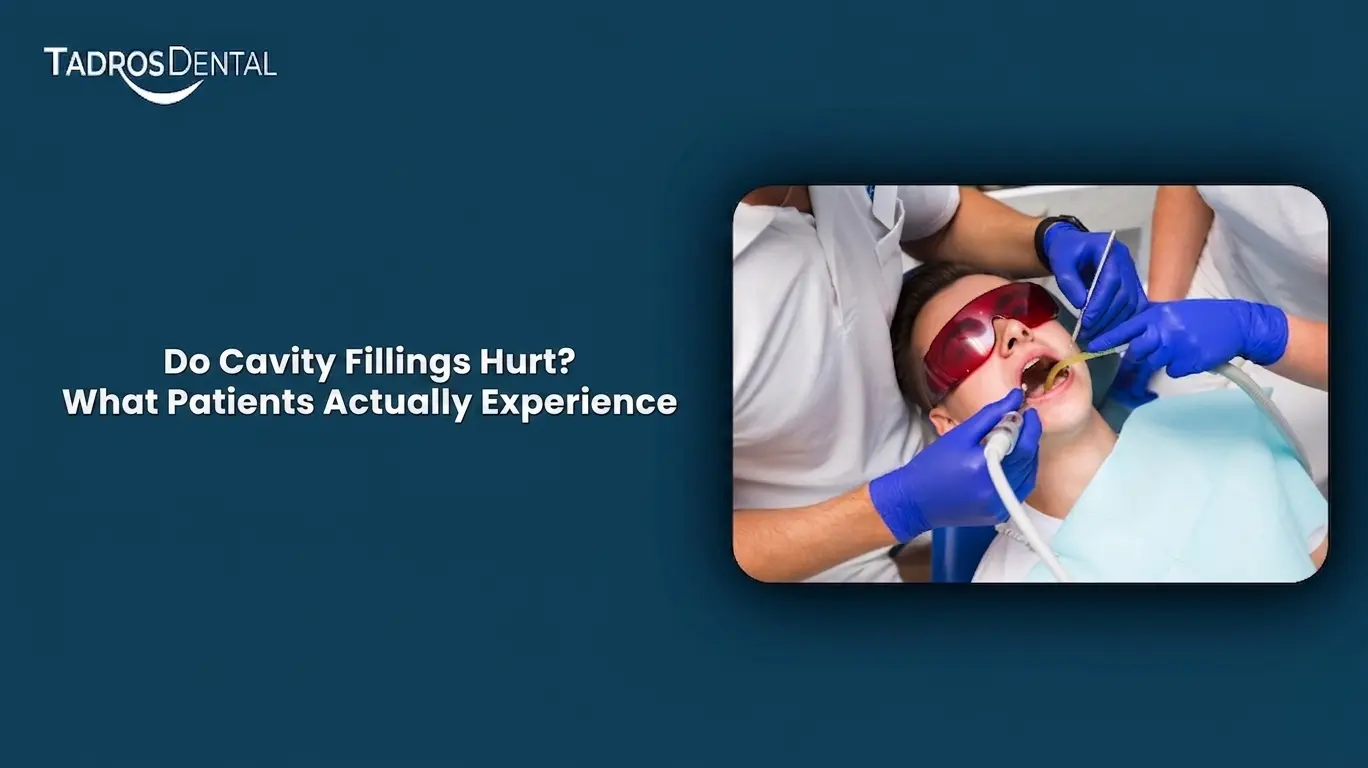
If the thought of a dental drill makes your heart race, you are certainly not alone. Many patients delay necessary treatment because they are gripped by one specific question: do cavity filling hurt? The short answer is no; thanks to modern local anesthetics and advanced dental technology, you should not feel any pain during the procedure itself. Most patients describe the sensation as nothing more than a bit of pressure or a slight tugging in the mouth.
If you are scheduled for a procedure or have been numbing the pain of a cavity with ibuprofen while avoiding the dentist, then keep reading. We will break down exactly what happens during a cavity dental filling, how to manage the 24 hours following your appointment, and why modern dentistry has made the "scary" dental visits a thing of the past.
A cavity filling is a restorative dental procedure used to treat tooth decay. When bacteria damage the enamel and create a hole (cavity), the dentist removes the decayed portion and fills it with a protective material to restore the tooth’s shape and function.
The most common filling materials include:
The goal is simple: stop decay from spreading and protect the tooth from further damage.
The most significant hurdle for most patients is the fear of the "needle" or the drill. However, when people ask, "Does it hurt to get a cavity filled?" they are often surprised to learn that the "pinch" of the numbing agent is usually the only discomfort they feel.
"Our priority is ensuring the patient feels nothing but a sense of relief," says one of our lead practitioners. "We use a 'tell-show-do' approach so there are no surprises. If a patient ever feels a twinge, we stop immediately and adjust. Modern dentistry is about comfort, not endurance."
Recent data suggests that approximately 36% of the population suffers from dental anxiety, with 12% having an extreme fear. Interestingly, studies show that patients who choose composite (tooth-colored) fillings report higher satisfaction rates.
While the chair time is painless, your mouth has still undergone a minor medical procedure. Understanding factors like recovery, treatment options, and the price of tooth filling can help you feel more prepared before your appointment. As the numbness wears off, you may experience a few temporary sensations.
It is common to feel some sensitivity to hot or cold temperatures for 24 to 48 hours. Your gums may also feel slightly tender near the injection site. This is a normal inflammatory response and usually fades by the second or third day.
While minor sensitivity is fine, you should contact Tadros Dental if you experience:
To ensure your recovery is as smooth as the procedure itself, following proper cavity filling recovery care can help protect your filling, reduce discomfort, and support better long-term results. Follow these post-care tips:
Cavity fillings are not typically painful procedures. The only real sensation most patients feel is a brief pinch from the anesthetic injection. After that, the tooth is numbed, and the treatment is carried out without pain.
Most patients leave the dental chair feeling relieved knowing their cavity has been treated before it turns into a bigger problem. If you've been delaying treatment because of fear or uncertainty, exploring Houston TX best cavity treatment options can help you restore your tooth early and avoid more complex procedures like root canals or dental crowns.
At Tadros Dental, we understand that Houston residents have many choices for their oral care. We set ourselves apart by prioritizing the "patient experience" as much as the clinical outcome. We know that can fillings hurt if the dentist is in a rush, which is why we never hurry.
From our gentle numbing techniques to our calming office environment, we ensure that your cavity dental filling is a non-event in your day. If you’ve been putting off an exam because you’re worried about discomfort, give us a call. We’ll show you how painless a healthy smile can actually be.
A deeper cavity may require more anesthetic and can result in slightly more post-operative sensitivity because the decay was closer to the tooth's nerve. However, during the procedure itself, you should still feel no pain at all.
Most patients feel completely back to normal within 24 to 48 hours. If you experience lingering sensitivity for more than a week, it is best to check back in with your dentist for a quick bite adjustment.
Actually, both procedures are performed under local anesthesia and should be painless. A filling is much quicker and less invasive than a root canal, making it the easier of the two experiences.
If you received a composite (white) filling, it is cured instantly, but you should wait until the numbness wears off to avoid biting your lip. If you have a silver filling, you may need to wait up to 24 hours before chewing hard foods.
The injection is often the only part patients "feel," described as a quick pinch lasting about five seconds. Once that part is over, the rest of the procedure is entirely sensation-free.
If pain persists for a week, your filling might be slightly too "high," causing your teeth to hit unevenly. A simple two-minute adjustment at our office usually resolves this immediately.
Neither should hurt during the procedure, but composite fillings bond directly to the tooth, often requiring less removal of healthy tooth structure, which can lead to less sensitivity for some patients.