Nobody wants to be the person in the room that everyone avoids during conversation. But here is a number that might surprise you: a large scale review in the Journal of Oral Rehabilitation found that about 31.8 percent of adults deal with halitosis at some point. That is nearly one out of every three people. And the American Dental Association puts the number even higher, estimating that half of all adults have dealt with ongoing bad breath during their lifetime.
So if you have been quietly dealing with this, you are far from alone. The real problem is that most people either try to mask it with mints or just hope it goes away on its own. Neither works long term. What does work is understanding where the smell is actually coming from and then doing something about it. That is exactly what this article covers the real causes behind halitosis, home fixes that actually help, and the point where you really should sit down with a dentist.
Halitosis means bad breath that keeps coming back. It is different from the breath that smells after eating onions, garlic, or spicy food. Food odor usually fades with time. Halitosis often returns because bacteria, dryness, plaque, or disease is still present.
Some people notice a bad taste in the mouth. Some feel their mouth is dry. Some see a white or yellow coating on the tongue. Others may have bleeding gums or food getting stuck in the same area again and again.
The difficult part is that many people cannot smell their own breath clearly. They may only find out when someone close to them mentions it. That can feel embarrassing, but it is also a sign to check what is happening inside the mouth.
Also Read: Understanding and Treating Chronic Bad Breath: Hidden Causes of Halitosis
Bad breath often starts when bacteria collect in hidden areas. These bacteria break down food bits, plaque, and dead cells. As they do that, they can create a strong smell.
The back of the tongue is one common place where odor starts. It has small grooves where bacteria can sit. Spaces between teeth are another problem area. The gumline can also hold plaque, especially if brushing is rushed.
This is why a person may brush daily and still have bad breath. Brushing the front teeth is not enough if the tongue, gumline, and spaces between teeth are not cleaned well.
If food and plaque stay in the mouth, bacteria keep growing. Brushing helps, but it does not clean everything. The toothbrush cannot reach tight spaces between teeth.
Flossing helps remove food and plaque from those spaces. If your floss smells bad after using it, that is a strong sign that bacteria and food were trapped there.
The tongue is often ignored during brushing. That is a mistake. A coated tongue can hold a lot of odor-causing bacteria.
If the back of your tongue looks white, yellow, or thick, it may be adding to the smell. Gentle tongue cleaning can help more than people expect.
Saliva cleans the mouth naturally. It washes away food particles and helps control germs. When your mouth is dry, bacteria stay longer and breath smells worse.
Dry mouth can happen because of low water intake, mouth breathing, smoking, alcohol, certain medicines, or sleeping with the mouth open. NIDCR explains that dry mouth can also increase the risk of tooth decay and mouth infections because saliva helps keep harmful germs under control.
Bad breath that smells strong or keeps returning can come from the gums. When plaque builds up around the gumline, the gums can become swollen and infected.
Warning signs include bleeding while brushing, sore gums, red gums, gum swelling, loose teeth, or a bad taste. Mouthwash may cover the smell for a short time, but it will not clean bacteria below the gumline.
A cavity can trap food and bacteria. As the tooth decay gets deeper, the smell may become worse.
A dental infection may also cause bad breath, pain, swelling, or a bad taste. This kind of problem needs dental care. Home remedies cannot repair decay or remove infection from inside a tooth.
Some smells come from daily habits. Coffee can dry the mouth. Alcohol can also make dryness worse. Smoking leaves an odor and raises the risk of gum problems.
Garlic, onions, and strong spices can also affect breath. These smells may come from the mouth at first, but they can also last longer after digestion.
Anything that sits in the mouth can collect bacteria. Retainers, aligners, dentures, and night guards should be cleaned every day.
If your appliance smells bad when you take it out, it may be part of the problem.
If you want to know how to get rid of halitosis naturally, start with simple steps that remove bacteria instead of only hiding the smell.
Brush twice a day for two minutes. Use a soft toothbrush and fluoride toothpaste. Pay attention to the gumline, not just the front surface of the teeth.
Floss once a day. If regular floss feels hard, use floss picks, interdental brushes, or a water flosser. The main goal is to clean between the teeth every day.
Clean your tongue gently. Use a tongue scraper or a toothbrush. Start from the back and move forward. Do not press too hard because that can irritate the tongue.
Drink more water through the day. This helps if your mouth feels dry, especially after coffee, after sleeping, or after talking for a long time.
Chew sugar-free gum when needed. It can help increase saliva. Avoid sugary mints because sugar can feed bacteria.
Clean dental appliances daily. Dentures, retainers, aligners, and night guards should not just be rinsed quickly. They need proper cleaning.
Sometimes you need quick relief before a meeting, date, interview, or social event. If you are looking for how to get rid of halitosis fast, try a full-mouth reset.
Brush your teeth, floss between them, clean your tongue, rinse with an alcohol-free mouthwash, drink water, and chew sugar-free gum if your mouth still feels dry.
This can help with morning breath, food odor, mild dry mouth, or surface bacteria. But if the smell returns after a few hours, the cause is likely still there.
Fast relief is not the same as real treatment. It helps in the moment, but it does not fix gum disease, tartar, cavities, or infection.
Mouthwash can help, but it depends on the type. Some rinses only cover odor for a short time. Others are made to reduce bacteria, plaque, gingivitis, cavities, or bad breath.
The ADA explains that cosmetic mouthwashes may temporarily reduce bad breath, while therapeutic mouthwashes contain active ingredients that can help with oral problems such as bad breath, plaque, gingivitis, and cavities.
If your mouth feels dry often, be careful with strong alcohol-based mouthwash. It may not be the best choice for everyone. An alcohol-free rinse may feel better, but your dentist can guide you based on your mouth.
Home care is helpful, but it has limits. It cannot remove hardened tartar. It cannot treat deep gum pockets. It cannot fill a cavity. It cannot clear an infected tooth.
If bad breath continues despite good oral hygiene, professional halitosis treatment in Houston can help identify the underlying cause. A dental examination can determine whether the problem is related to gum disease, plaque buildup, tooth decay, dry mouth, or another oral health concern.
You should see a dentist if bad breath lasts more than two weeks after improving your brushing, flossing, tongue cleaning, and water intake.
You should also book a visit sooner if you notice bleeding gums, tooth pain, swelling, loose teeth, a bad taste that keeps coming back, very dry mouth, or food getting trapped in one spot.
These signs do not always mean something serious, but they should not be ignored.
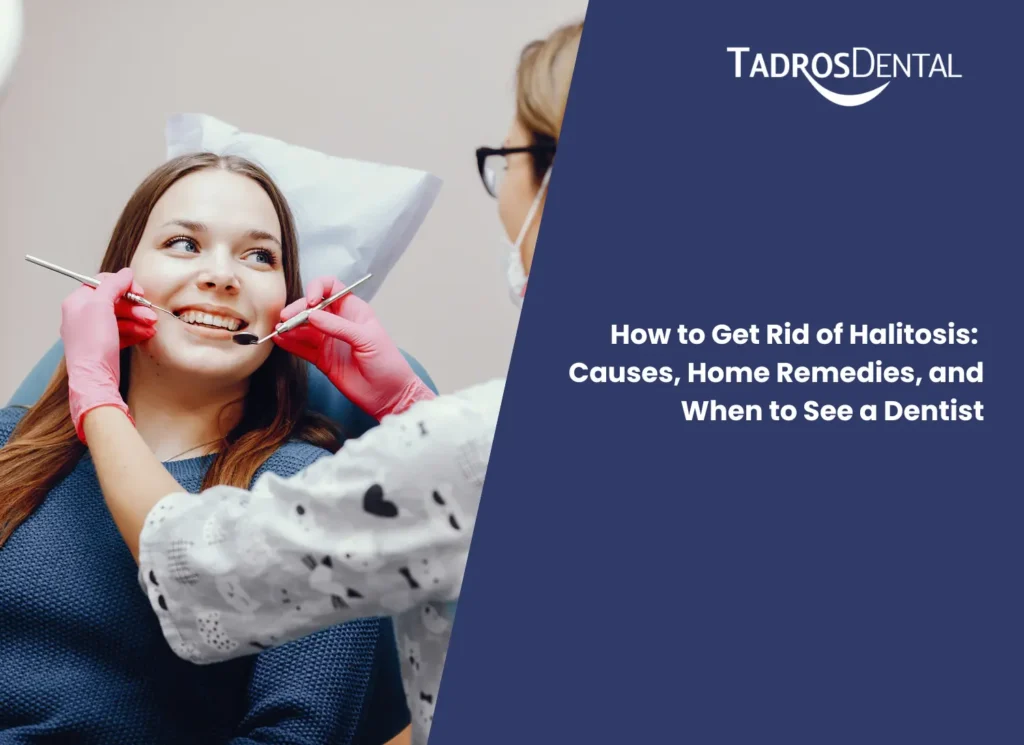
A dentist will look for the real source of the smell. They may check your teeth, gums, tongue, fillings, crowns, dentures, retainers, and gum pockets.
They may look for plaque, tartar, cavities, infection, dry mouth, or areas where food is getting stuck.
This is where proper halitosis treatment becomes clear. If tartar is the issue, you may need a cleaning. If gum disease is present, you may need gum treatment. If a cavity is trapping food, it may need a filling. If dry mouth is the main cause, you may need changes in your routine or special products.
If your mouth looks healthy but the bad breath still does not improve, the dentist may suggest checking for sinus problems, reflux, diabetes, or another medical cause.
Yes, halitosis can come back if the cause returns.
If you stop flossing, plaque can build up again. If you brush but skip the tongue, odor can return from tongue coating. If gum disease is left untreated, mouthwash will not solve the smell.
The best way to prevent bad breath is to keep a steady routine. Brush, floss, clean your tongue, drink enough water, avoid tobacco, clean dental appliances, and visit the dentist regularly.
Bad breath is common, but ongoing halitosis should not be ignored. If you want to understand how to get rid of halitosis, focus on the cause instead of only covering the smell.
Start with better brushing, daily flossing, tongue cleaning, water, and the right mouthwash. If your breath still keeps coming back, a dental exam can help find whether the problem is plaque, gum disease, dry mouth, tooth decay, infection, or something else.
Book a visit at Tadros Dental to find the real cause of bad breath and get the right treatment. A simple dental checkup can help you stop guessing and start fixing the problem. Book a call with our experts today!