Tooth decay is one of the most common dental problems, but many people do not notice it until pain starts. The CDC reports that nearly 21% of U.S. adults ages 20 to 64 had untreated decay in one or more permanent teeth, which shows how often cavities are left too long before treatment. The good news is that the stages of tooth decay do not happen overnight. Decay usually moves slowly from early mineral loss to deeper tooth damage. When you understand the signs early, you can often stop the problem before it turns into pain, infection, or tooth loss.
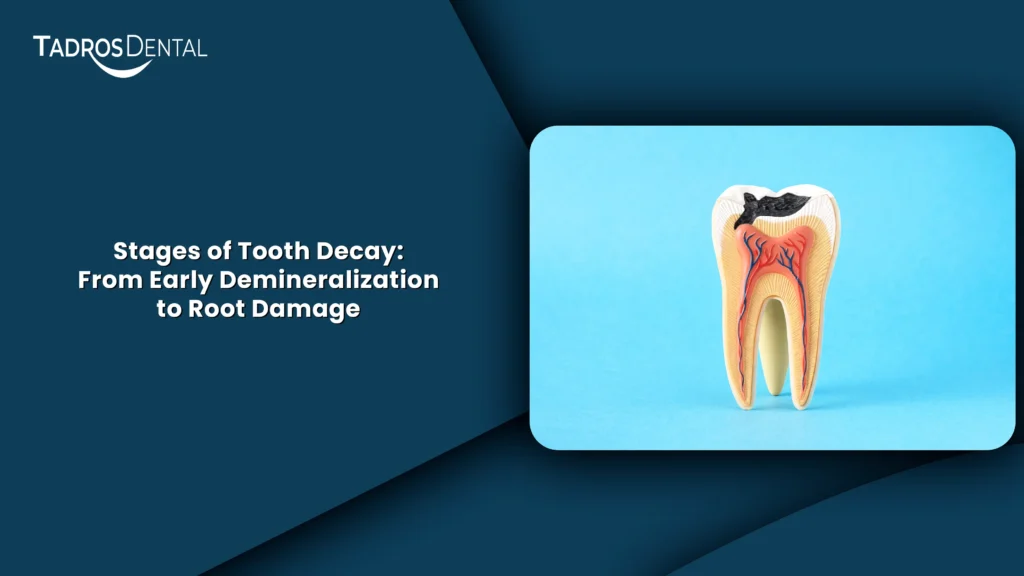
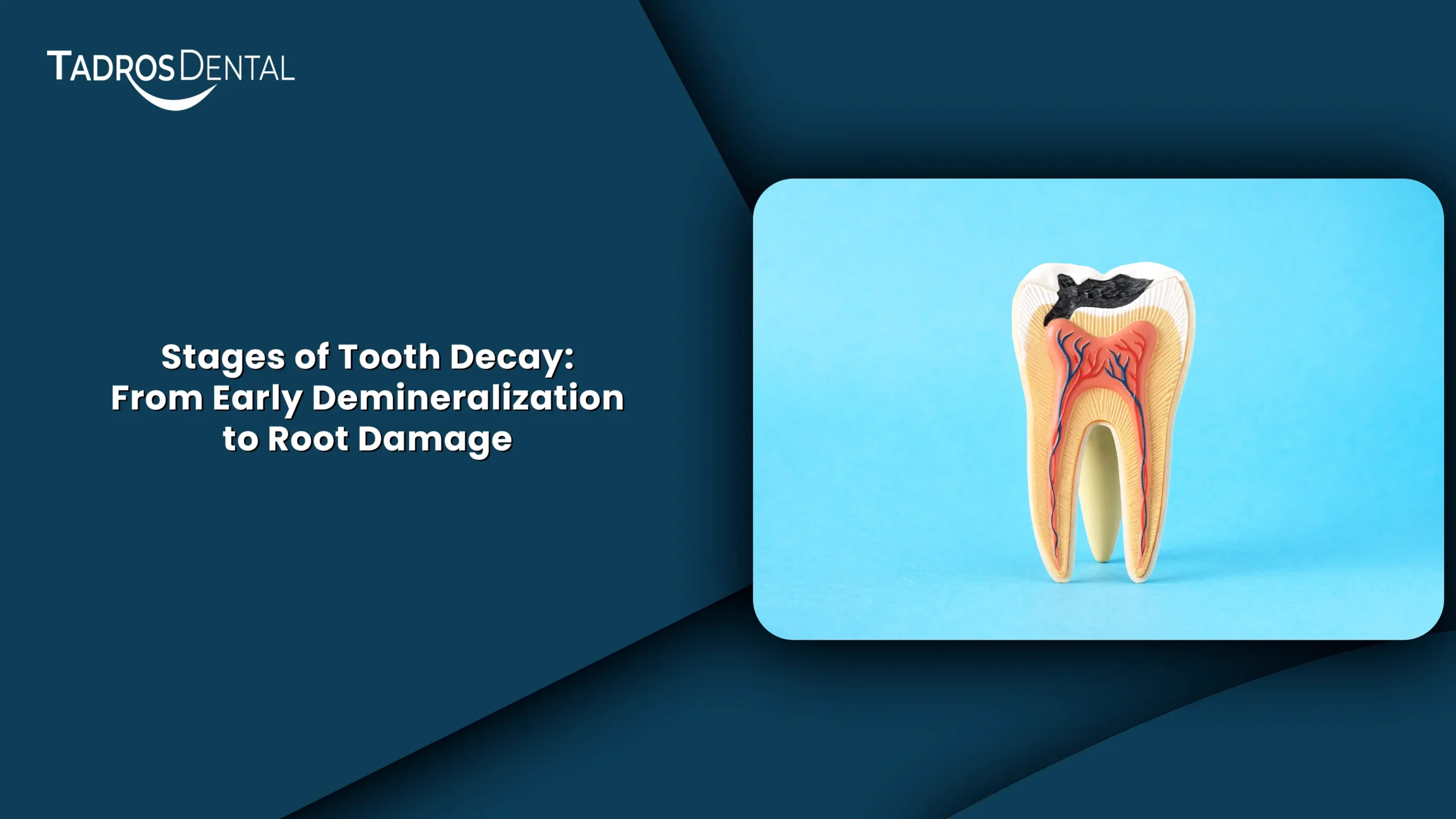
The different stages of tooth decay show how a small weak spot on enamel can turn into a deep cavity. Most dentists explain tooth decay in five main stages: early demineralization, enamel decay, dentin decay, pulp damage, and abscess or root damage.
Each stage has different signs and treatment needs. In the beginning stages of tooth decay, the tooth may still be saved with fluoride, better brushing, and diet changes. Once decay creates a hole or reaches the deeper layers, dental treatment becomes more important.
The first stage of tooth decay begins with plaque bacteria eating food, particularly sugar and starch. It is these bacteria that produce acids that remove the minerals from the enamel. The top layer of this tooth is hard, called enamel, and can weaken if the attacks of acid occur repeatedly.
The National Institute of Dental and Craniofacial Research website says fluoride helps to slow the progression of decay and may even help to reverse or arrest early tooth decay before it begins. That's why the early stage is a critical one.
The first stage of tooth decay is called early demineralization of the tooth. This is when the enamel begins to demineralize. A chalky white area can be seen close to the gum line, among teeth, or on the chewing surface.
At this stage, there is no pain. There are a lot of people who miss it due to the fact that the tooth seems to be just fine. These are the early signs of tooth decay, and it may be possible to reverse the damage.
Common signs include:
Treatment can include fluoride varnish, improved flossing, brushing, and reduced frequency of sugary snacks. Following essential tooth care tips to prevent tooth decay at this stage can also help strengthen enamel before damage spreads.
If mineral loss continues, the enamel starts breaking down. The white spot might be yellow, light brown, or dark brown. There can be a little pit or hole in the enamel.
This is where the weakness is more than just that. The decayed area will need to be removed and replaced with a filling. Cavities are areas of decay on the surface of the tooth that may require a filling, root canal therapy, or extraction, depending on the severity.
Signs may include:
This is where most people are first aware of a problem.
Dentin is the softer layer under enamel. When decay penetrates the dentin, it will progress at a greater rate because dentin is not as hard as enamel. This is the time that you will begin to see symptoms more clearly.
Might experience pain while drinking cold water, eating sweets, or chewing on that side. The tooth may appear to be darker because it is further down (deeper) into the tooth.
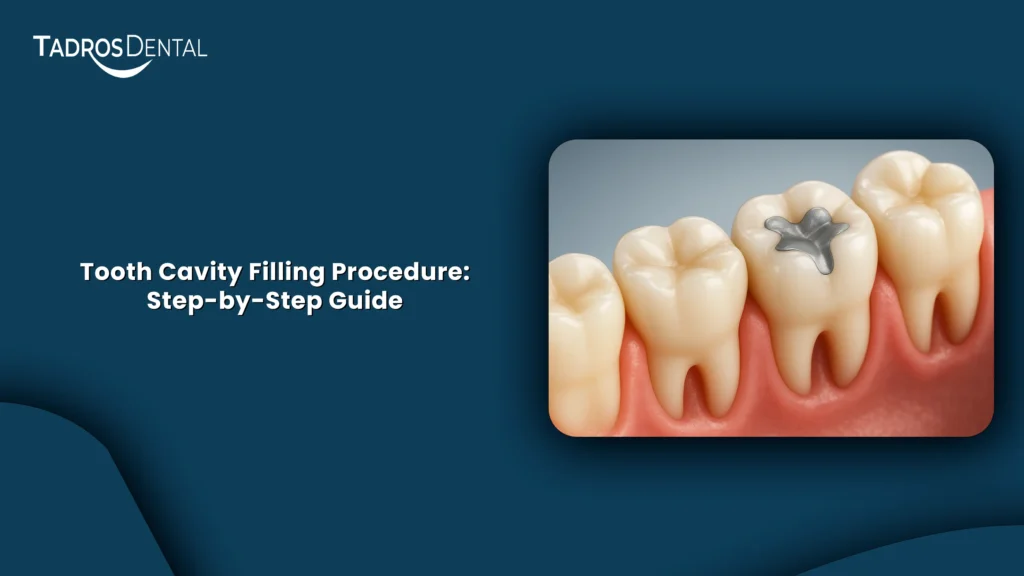
If the decay has progressed into a cavity but not into the nerve of the tooth, a filling is still a possible treatment. If the cavity is big, the tooth might have to be crowned after the decay is removed.
The inner part of a tooth is called its pulp. Contains nerves and blood vessels. If the decay progresses to involve the outer parts of the teeth, it can be severe and recurrent.
During this stage, this could lead to:
However, when the pulp is infected or severely inflamed, it is generally much harder to make a filling that will last permanently. A root canal treatment could be the right choice to remove the infected tissue and save the tooth.
This is the worst phase. An abscess is a pocket of infection that can occur close to the tooth root or around the gum. Undiagnosed cavities can form abscesses, and, very rarely, become seriously infected and spread to other parts of the body, according to the CDC.
Signs may include:
Treatment may involve removal of the infected tooth, antibiotics as necessary, drainage or root canal treatment if the tooth is not treatable.
Also Read: 5 Hidden Causes of Tooth Decay You Never Knew About
If you see white spots, dark marks, a hole, tooth sensitivity, or pain when you chew, go to a dentist. Never wait until the pain is really bad. When it causes pain, a cavity can have progressed close to the nerve.
The beginning stages of tooth decay are easier, faster, and less costly to treat. Professional cavity care in Houston and regular checkups can also detect decay between your teeth, which you may not notice in the mirror.
Every day routines have an impact! Brush at least twice a day with fluoride toothpaste, floss once daily, drink water following meals, and limit frequent snacking of sweets or sticky foods. Avoid little sips of sweet beverages for extended periods of time, as this will leave sugar on the tooth for longer.
Regular dental cleanings also aid in the removal of plaque and tartar, which cannot be completely brushed away at home.
Tooth decay does not always start with pain. Most of the time it starts as a tiny white spot with a loss of minerals from the enamel. Failure to pass this stage will allow decay to proceed through the enamel to dentin and pulp and into the root zone. Every stage requires different care, ranging from fluoride treatment to filling cracks in the teeth, root canal to removal if it's too far gone.
Tooth decay ideally should be treated before symptoms occur. Good brushing, daily flossing, less sugar, and regular dental checkups will keep your teeth in good shape and prevent minor issues from becoming major ones.
Don't wait for it to worsen if you notice tooth sensitivity (increased sensitivity), dark spots, swelling, or pain while eating. Make a dentist appointment at Tadros Dental to treat the decay early on and prevent it from progressing further.
Yes, early enamel mineral loss may be reversed if there is no hole yet. Fluoride, better oral care, and diet changes can help strengthen enamel.
The early stages of tooth decay may look like white, chalky spots on the tooth. Some people also notice mild sensitivity.
No. Early decay may not hurt at all. Pain usually starts when decay reaches dentin or the tooth nerve.
An untreated cavity can grow deeper, reach the pulp, cause infection, and may lead to root damage or tooth loss.
Treatment depends on the stage. Early decay may need fluoride, small cavities may need fillings, and deeper infection may need root canal treatment or extraction.