Many people want their teeth straightened, but delay treatment because they picture metal braces, soreness, and a long process that disrupts daily life. That hesitation is extremely common. It also means that many people are living out their years with crowding, bite issues, or teeth that are difficult to clean for much longer than they need to be.
Oral health problems are already a massive problem around the world, with an estimated 3.5 billion people suffering from them. When teeth are crowded or fail to meet correctly, it can make daily cleaning a challenge and can add to long-term oral health problems.
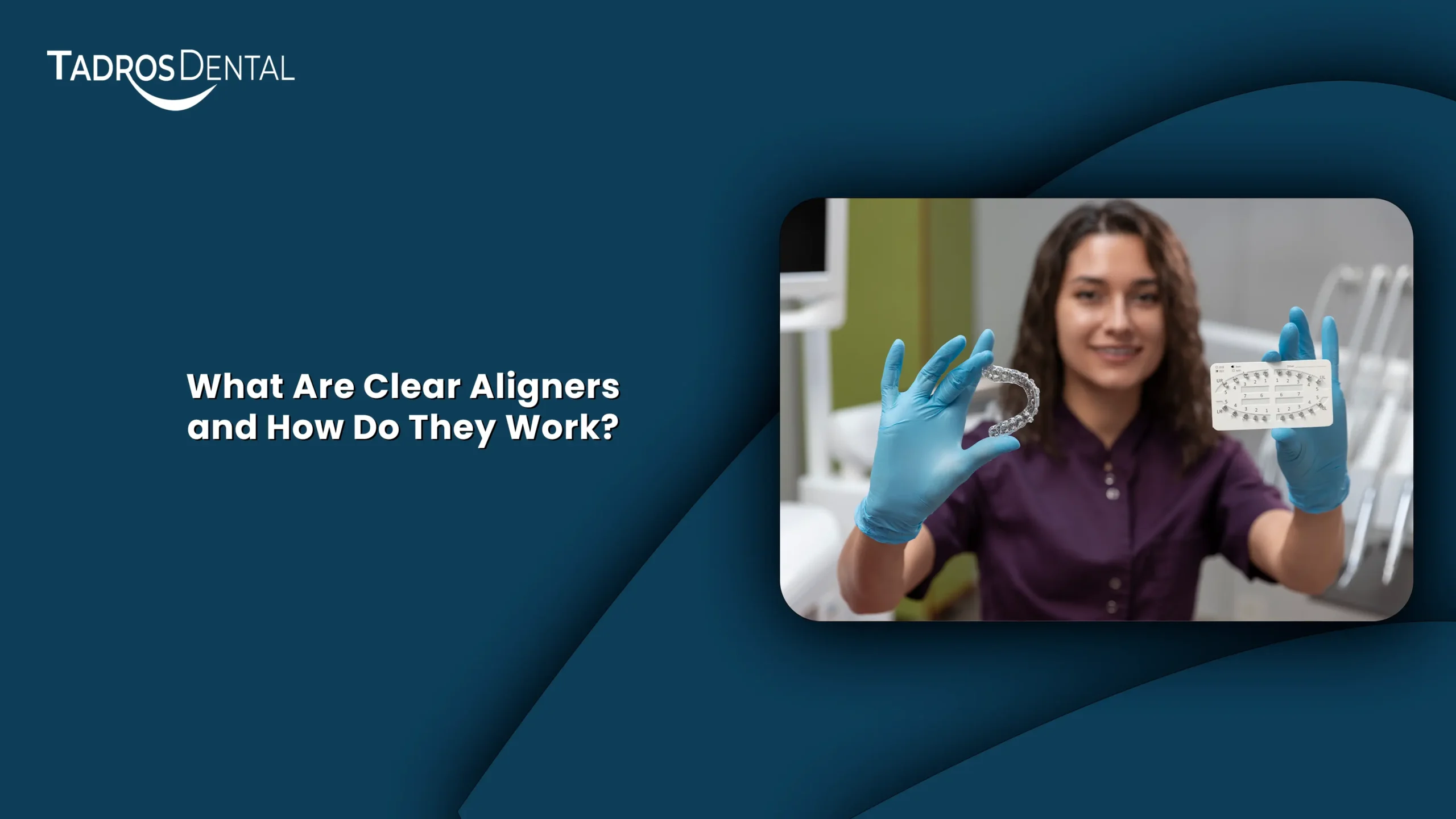
Clear aligners are custom-made, clear plastic trays designed to fit snugly over your teeth. They are clear and smooth and much less visible than traditional braces. Instead of brackets and wires, they apply gentle pressure to move teeth gradually.
They are not a single tray. Treatment is a series. Each tray is shaped slightly differently, so each new set offers the continuous movement of the last one. That sequence is what enables teeth to move slowly rather than all at once.
Clear aligners are commonly used to treat crowding, spacing, and various bite problems such as overbite, underbite, open bite, and crossbite and many other bite problems, such as overbite, underbite, open bite, and crossbite. They can also be combined with elastics in some cases, which helps to improve the way that upper and lower teeth fit together.
The important part is this. Aligners are a great option, but not the right option for every smile. Some cases are treated more predictably using braces, and some people do best with a combination of treatments.
Each aligner tray is designed to exert pressure on some teeth, but in very small amounts. You wear one tray for a specific period, then switch to the next tray in the series. The process repeats to get your teeth into the position that has been planned for you.
Most treatments involve wearing the trays for a minimum of 22 hours every day. Each aligner is typically worn for about one week, although timing varies depending on your treatment plan. Trays also need to come out when you eat, drink, brush, and floss.
This is one of the biggest reasons aligners are convenient and also one of the main reasons some treatments get delayed. They only work when they are worn consistently. If they remain out too long, the teeth fail to move on time.
Tooth movement does not occur only on the surface. It is a biological process. Constant pressure causes the area of bone surrounding the teeth to remodel so that the teeth will safely move into a new position over time. The same basic principle is applied in both braces and aligners.
That is why good orthodontic treatment is not just about getting the front teeth to look straight. The goal is a healthy bite where teeth fit together properly and are easier to clean.
A lot of patients assume aligners are just trays and nothing else. In simple cases, treatment may feel very straightforward. In other cases, a few extra steps make the movement more accurate.
Attachments are small, tooth-colored shapes placed on certain teeth. They help the tray grip better and guide tougher movements. They are very common in aligner treatment, especially when the teeth need more control. Review studies show these attachments can improve aligner biomechanics and make movement more effective.
Some patients need a little extra space between teeth, so crowded teeth can line up properly. This is called interproximal reduction, or IPR. It removes a very small amount of enamel in selected areas to create room.
IPR is a standard part of many aligner plans, but it has to be planned carefully because it is permanent. That is one more reason proper diagnosis matters before treatment starts.
When the bite needs more correction, aligners may be used with elastics. This is often done to improve how the top and bottom teeth come together. Two people can both have clear aligners and still have very different treatment setups because their bite goals are different.
Who Is a Good Candidate for Clear Aligners?
Clear aligners are a good option for many people, but a full dental checkup confirms if they are right for you. If you are in the Houston area, a houston tx clear aligners consultation includes the exam, bite assessment, and records needed to tell whether your case suits trays or needs braces.
Also Read: 5 Affordable Cosmetic Dentistry Options You Should Know
This is the question the majority of people will ask first, and there isn't really a one-size-fits-all answer, as it will depend on your bite, your habits, and your priorities.
If appearance is your greatest concern, clear aligners are typically the winner. They are significantly less visible than braces, which is why they are very much preferred by adults and also older teenagers. They are also perceived to be cleaner in pictures and meetings, which matters to many patients in professional settings.
Aligners are removable, so they make it easier to eat and also to brush. You can eat like normal, after which you brush and floss like normal, and then place the trays back in after the process is finished. Braces are kept on the teeth, and they usually require increased effort to clean, and food choices often require more care.
At the same time, removable trays come with responsibility. If they are not worn enough, treatment can drag on or lose accuracy. Braces do not have that problem because they are fixed in place.
Most people feel pressure with both braces and aligners because teeth are moving. The difference is often in the early experience. Research reviews show that aligner patients often report better day-to-day comfort and quality of life during treatment, with lower pain at certain early time points. The gap is not always huge, and by the end of treatment, comfort differences may level out, but many patients still find aligners easier at the start.
Braces still have an advantage in some complex cases. If the case involves severe malocclusion, larger rotations, or movements that need stronger control, braces may be more predictable. That is why a proper exam matters more than trends or ads. The goal is not to pick the most popular treatment. The goal is to choose the one that will work best for your bite.
This part is often overlooked. Clear aligners are not a beauty product. They are orthodontic treatments. They move teeth, change bite contact, and affect bone and gum support around the teeth.
For this reason, aligners should be used under direct supervision. A real exam, proper records, and follow-up visits help catch issues early and keep the plan on track.
There is also a clear reason to avoid unsupervised treatment. A study that reviewed FDA MAUDE reports found documented problems with direct-to-consumer aligner cases, including bite issues, pain, sensitivity, and gum-related problems, with some outcomes described as irreversible.
The easiest way to think about aligner care is this. Proper aligner care combines strong oral hygiene habits with consistent wear.
Aligners can push the liquid and food particles to the teeth. That increases the risk of cavities and gum disease if someone drinks sugary or acidic beverages when they are wearing the trays or puts them back in without washing.
A simple routine makes a big difference:
These habits protect your teeth and also help your treatment stay on schedule.
A lot of people think treatment ends with the last tray. It does not.
Teeth naturally try to shift over time, even after a great result. Retainers keep the teeth in their new positions and help to minimize relapse. They also allow the bone to be supported while it adapts to the new tooth positions.
Retainers can be clear, acrylic-based, or fixed behind the tooth. The appropriate type depends on your case and the recommendation of your provider. What is most important is that they be worn as prescribed. Skipping retainers is one of the most important ways of losing the result you pay for in the first place.
Clear aligners work very well for many people because they are discreet, removable, and effective when they are planned right, and you wear them reliably. The best results are expected not from the trays alone, but with a complete diagnosis for the patient after creating a realistic plan and good daily habits.
Want a clear-cut answer to your own slice for a smile and your bite? Book a consultation with Tadros Dental and get a treatment plan that works for you and your teeth, routine, and long-term oral health goals.